Defending Against Predators and Physical Threats
While Varroa mites and diseases get most of the attention, physical predators like wasps, hornets, mice, skunks, and bears can devastate hives. Learn how to protect your colonies from these threats with proven prevention strategies and seasonal defenses.
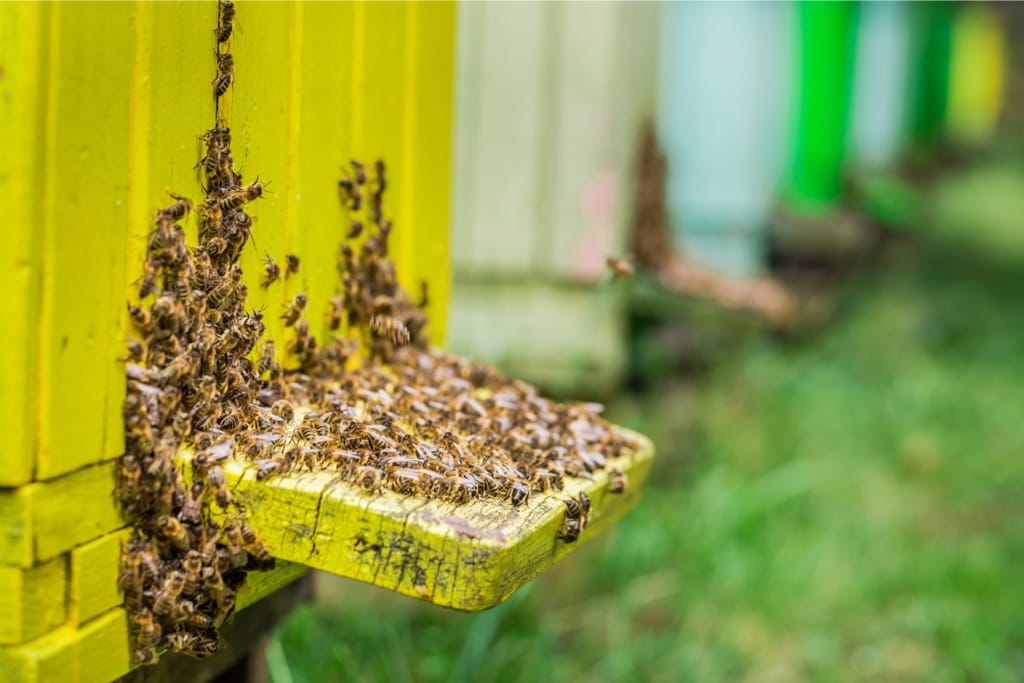
While most beekeepers are rightly concerned about Varroa mites, bacteria, and viruses, there's another category of threats that can devastate a colony overnight: predators and physical intruders. These threats might not spread from hive to hive like disease, but they can weaken or destroy a colony just as effectively.
After years of managing hives, I've learned that prevention is far easier than dealing with the aftermath of a predator attack. Let me share what I've observed and the strategies that actually work.
Yellow Jackets and Paper Wasps
Yellow jackets (Vespula species and Dolichovespula species) and paper wasps (Polistes species) are the most persistent threats to managed hives. These social wasps are attracted to the honey stores and can become aggressive raiders, especially in late summer and fall when their natural food sources dwindle.
The Problem: Yellow jackets will station themselves at hive entrances, picking off foragers as they return. In severe cases, they'll invade the hive itself, killing bees and robbing honey stores. A weak colony can be completely overrun in a matter of days.
Protection Strategies:
- Reduce entrance size: This is your first line of defense. In late summer, narrow your hive entrances to just one or two bee-widths. Your bees can defend a smaller opening far more effectively.
- Remove wasp nests early: Scout your apiary regularly in spring and early summer. Destroy any wasp nests you find while they're still small.
- Avoid spills: Clean up any honey or sugar syrup spills immediately. These attract wasps and can trigger robbing behavior.
- Strengthen weak colonies: Combine struggling hives or provide extra bees from stronger colonies. A robust population can defend itself.
- Wasp traps: Place traps at least 20 feet or 6 meters from your hives. Position them downwind so foraging bees aren't attracted to them.
Hornets
The European Hornet (Vespa crabro) is a formidable predator of honeybees, and the invasive Asian Giant Hornet (Vespa mandarinia) poses an even greater threat in areas where it has established itself. Both species actively hunt honeybees.
The Problem: Hornets hunt by ambushing foragers near the hive entrance or capturing them in flight. European Hornets typically hunt individually, while Asian Giant Hornets can coordinate attacks that decimate entire colonies.
Protection Strategies:
- Entrance guards: Metal or wooden entrance reducers with bee-sized holes prevent hornets from entering while allowing bees to pass.
- Electric fencing for Asian Giant Hornets: In regions where this invasive species is present, specialized electric guards at hive entrances can deter them.
- Report sightings: If you spot Asian Giant Hornets, report them immediately to your local agricultural extension office. Early detection is crucial for containment.
- Protective screening: Some beekeepers install fine mesh screens around hives in high-risk areas, though this requires careful design to ensure adequate ventilation.
Mice
Field mice and other small rodents (Mus musculus, Peromyscus species, and others) seek shelter in beehives during fall and winter. What starts as a search for warmth becomes a destructive tenancy.
The Problem: Mice chew through comb to build nests, disturb the cluster, consume honey and pollen, and leave droppings throughout the hive. The stress can cause colonies to abscond or weaken to the point of collapse.
Protection Strategies:
- Mouse guards: Install mouse guards with openings no larger than 3/8 inch or 1 centimeter before cold weather arrives. Bees can pass through, but mice cannot.
- Elevate hives: Keep hives at least 18 inches or 45 centimeters off the ground. This makes them less accessible to mice.
- Seal cracks: Inspect hive bodies for gaps and cracks. Even small openings can admit mice.
- Remove guards in spring: Don't forget to remove or enlarge mouse guards when temperatures warm and bee traffic increases.
Skunks
Skunks (Mephitis mephitis and other species) are nocturnal raiders that scratch at hive entrances to draw out bees, which they then eat. They're surprisingly persistent and can visit the same hive night after night.
The Problem: Beyond the direct loss of bees, skunk attacks disrupt the colony and can trigger defensive behavior that makes working your hives difficult. The constant disturbance stresses the colony and reduces productivity.
Protection Strategies:
- Elevated hives: Skunks prefer to stand on solid ground and reach up to the entrance. Raising hives 24 inches or 60 centimeters or higher makes this difficult.
- Carpet tack strips: Place strips of carpet tacks or nail boards in front of hive entrances. Skunks have tender paws and will avoid the discomfort. Ensure they're positioned so beekeepers won't step on them. It's an old-fashioned but effective method, though many beekeepers today prefer to raise hives higher or use electric fencing instead, as these are safer for people working around the hives.
- Hardware cloth aprons: Install a 3-foot (90 centimeter) apron of hardware cloth extending from the hive entrance. Skunks dislike walking on it.
- Electric fencing: A single strand of electric wire 6-8 inches (15-20 centimeters) off the ground effectively deters skunks.
Bears
In rural and wilderness areas, American Black Bears (Ursus americanus) pose one of the most destructive threats to apiaries. A single bear visit can destroy multiple hives in minutes.
The Problem: Bears are after both honey and protein-rich brood. They'll overturn hives, tear them apart, and return repeatedly once they've found a food source. The damage is catastrophic and expensive.
Protection Strategies:
- Electric fencing is essential: This is the only reliable protection in bear country. Install a properly designed electric fence with at least four strands, beginning 10 inches (25 centimeters) off the ground.
- Energize adequately: Use a charger rated for at least 0.5 joules, preferably higher. Bears have thick fur and need a strong jolt to deter them.
- Bait the fence: Smear peanut butter or bacon grease on aluminum foil strips attached to the fence. Bears investigate with their sensitive noses and receive a memorable shock.
- Maintain vegetation: Keep grass and weeds clear of fence lines to prevent grounding.
- Set up before placing hives: Establish and test your electric fence before introducing bees to the site.
Ants
Various ant species can invade hives, though they're typically more of a nuisance than a serious threat to strong colonies. However, in some regions, fire ants (Solenopsis invicta) can be devastating.
The Problem: Ants are attracted to honey and can stress colonies by constantly invading the hive. Fire ants can attack and kill brood and even adult bees.
Protection Strategies:
- Oil moats: Place hive stands in containers filled with oil or soapy water. Ants can't cross the barrier.
- Ground barriers: Apply food-grade diatomaceous earth or cinnamon around hive stand legs (though effectiveness varies).
- Eliminate access routes: Ensure vegetation doesn't touch hives, creating ant highways.
- Maintain strong colonies: Healthy, populous hives can usually manage ant intrusions on their own.
Woodpeckers
Several woodpecker species (particularly Northern Flickers, Colaptes auratus, and Pileated Woodpeckers, Dryocopus pileatus) will hammer at wooden hive bodies, sometimes excavating large holes.
The Problem: While they're typically after insects in the wood, woodpeckers can create openings that admit rain, cold, and other predators. The noise and vibration also stress the colony.
Protection Strategies:
- Wrap hives in winter: Use chicken wire or hardware cloth wrapped loosely around hive bodies. Leave a 2-3 inch (5-8 centimeters) gap between the wire and the hive.
- Hang reflective tape: Strips of reflective Mylar tape can discourage woodpeckers.
- Repair damage promptly: Fill holes and paint them to prevent repeated attacks at the same location.
Small Hive Beetles
While Small Hive Beetles (Aethina tumida) are often grouped with pests rather than predators, I'd like to mention them here. These beetles aren't directly after your bees. They're after the resources.
The Problem: Adult beetles lay eggs in the hive, and the larvae tunnel through comb, feeding on honey, pollen, and brood. Their feeding creates a slimy mess that ferments and can cause honey to be rejected.
Protection Strategies:
- Strong colonies: This is your best defense. Populous hives can chase, cage, and control beetles.
- Beetle traps: Various commercial traps can be placed between frames or under the inner cover.
- Ground treatment: In severe infestation areas, treating soil around hives can interrupt the beetle's life cycle (larvae pupate in soil).
- Reduce excess space: Remove empty supers and frames. Beetles hide in spaces bees can't patrol.
General Best Practices
Regardless of which predators or pests threaten your apiary, some universal principles apply:
Maintain strong colonies: This is your first and best defense against nearly every threat. Strong populations can defend entrances, patrol the hive interior, and recover from losses.
Regular inspections: Visit your apiary frequently enough to spot problems early. A few mice are easier to address than an established nest. Early-stage wasp pressure is manageable. A full-blown robbing event is not.
Strategic placement: Consider predator pressure when siting an apiary. Locating hives near human activity often deters larger predators. Good visibility helps you monitor for problems.
Seasonal adjustments: Your defensive measures should change with the seasons. Install mouse guards in fall, reduce entrances during the nectar dearth, and maintain bear fencing year-round in at-risk areas.
Document everything: Keep records of predator activity, what interventions worked, and what didn't. Colonies helps you track these observations alongside your regular hive inspections, building a knowledge base you can reference year after year.
A Final Thought
Every apiary faces a unique combination of threats based on geography, season, and local wildlife populations. What works in one location might be unnecessary in another. There are no bears in Belgium, where I live. Pay attention to what your bees are telling you, learn from other beekeepers in your area, and don't hesitate to adapt your strategies as conditions change.
The goal isn't to create a fortress. It's to give your bees a fair chance to do what they do best. When we protect them from threats they can't handle alone, they reward us with thriving colonies and the deep satisfaction that comes from good stewardship.
Technology should serve tradition, not overshadow it. That's why I built Colonies, to help you track these observations, remember what worked last season, and spend less time on paperwork and more time with your bees.