How Larval Nutrition Drives Every Hive Management Decision
Why do walk-away splits work in spring but fail in fall? Why does fall protein feeding matter so much? The answer lies in what happens during the six days of larval development. Understanding larval nutrition transforms beekeeping from random rules into logical decisions.

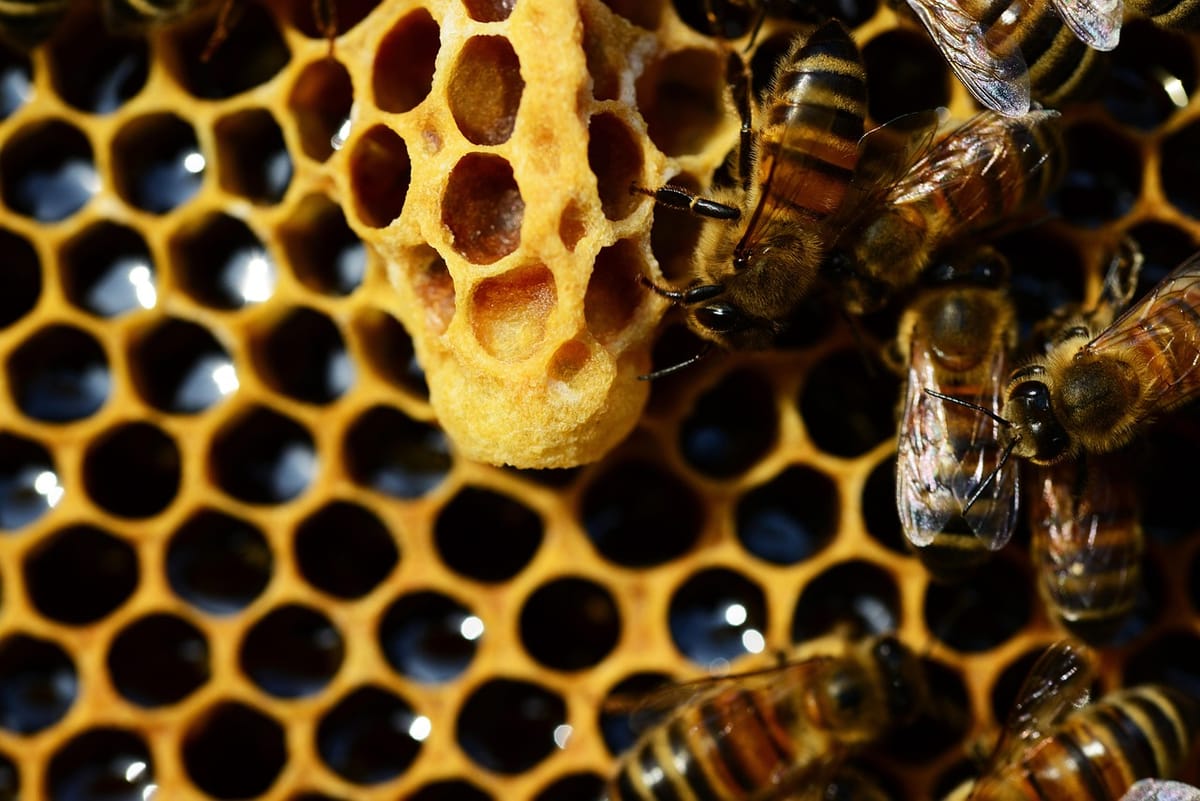
If you've been keeping bees for any length of time, you've heard the standard advice: do walk-away splits in spring, feed protein in fall, and time your brood breaks for varroa control. Have you ever stopped to ask yourself why these practices work? That's the focus of this post. Let's dive in.
The answer almost always comes back to one thing: larval nutrition.
The answer almost always comes back to one thing: larval nutrition. Understanding what happens in those tiny cells during the six days of larval development unlocks the logic behind nearly every hive management decision we make. Once you see the connection, beekeeping stops feeling like a collection of random rules and starts making sense.
The First Three Days Change Everything
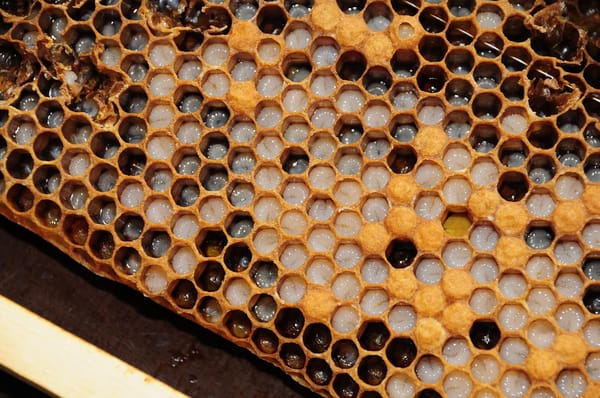
Here's something that still amazes me: every single larva in your hive starts life eating exactly the same thing. Worker, drone, or queen, it doesn't matter. For the first three days, all larvae receive royal jelly, that creamy white secretion produced by nurse bees. At this stage, they're all identical.
Then, on day three, something remarkable happens. The nurse bees make a choice.
Future workers get switched to a mixture of royal jelly, pollen, and honey. Drone larvae get a similar diet, just more of it. But queen larvae? They keep swimming in pure royal jelly, and the sheer quantity of food they receive triggers a completely different developmental pathway.
It's not genetics that makes a queen. It's their diet. Think about that.
This is why day three matters so much for queen rearing. After that critical window closes, a larva's fate is sealed. The epigenetic switches have been flipped. A four-day-old larva simply cannot become a queen, no matter how much royal jelly you give it.
Now think about what this means when you're doing a walk-away split.
Why Walk-Away Splits Have a Deadline
When you split a hive and leave the queenless half to raise its own queen, you're gambling that your bees can find larvae young enough to work with. If all your larvae are older than three days, you've just created a colony that will fail. They'll try (bees always try), but the queens they raise will be inferior at best, or the colony will simply dwindle away.
That is why timing matters for splits. Spring splits work beautifully because the queen is laying prolifically, and you've got frames full of eggs and young larvae. Fall splits are risky because brood rearing is slowing down, and you might not have enough young larvae to choose from.
It gets more interesting, though. Even if you have young larvae, your bees won't necessarily choose them. Research shows that bees preferentially select well-fed larvae over food-deprived larvae, even when larvae are more closely related to the workers. When raising an emergency queen, they're not evaluating genetic relatedness. They're evaluating nutrition. A plump, well-fed two-day-old larva gets the nod over a scrawny one-day-old larva every time.
This means your splits and requeening efforts need to happen when your colony has abundant protein stores. A colony struggling to feed its brood won't raise great queens, even if you give them perfect-aged larvae to work with.
The Protein Connection: Why Pollen Matters
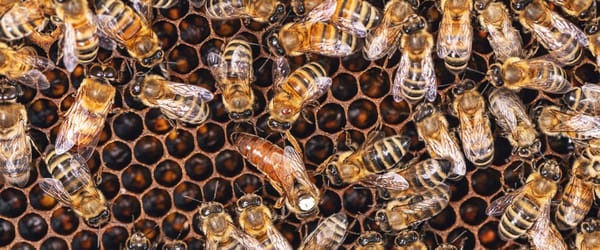
Let's talk about what goes into making all that royal jelly. Nurse bees, those young workers between roughly 6 and 12 days old, have large, developed hypopharyngeal glands in their heads. These glands convert pollen into royal jelly, and they're working overtime. During the six days a larva is being fed, it receives approximately 10,000 visits from nurse bees. That's a feeding every 43 seconds, around the clock.
Think about the protein demand that creates. When do your colonies have the most pollen coming in? Spring, right? Those large dandelion and fruit tree blooms. Pollen so thick you can see it on the landing board. That is exactly when colonies want to swarm, and it's no coincidence.
Spring swarming coincides with pollen abundance because that's when colonies can afford the critical investment of raising thousands of drones, building queen cells, and feeding multiple fat queen larvae to maturity. Swarming is expensive, nutritionally speaking. Colonies don't do it when they're starving.
It also explains why splits work better in spring. You're not just benefiting from the weather and the nectar flow. You're working with colonies that have the protein resources to invest in raising quality queens.
Why Fresh Pollen Isn't Immediately Useful
Fresh pollen isn't actually all that digestible to bees. I was surprised when I first learned about this. When foragers bring it in and pack it into cells, it needs to be fermented first. The bees mix it with nectar, add some glandular secretions, and the resulting bee bread goes through a fermentation process that breaks down the tough outer shells and makes the nutrients bioavailable.
This fermentation takes time, usually several days. Which means there's always a lag between when pollen comes into the hive and when it can actually be used to feed larvae. That is one reason why chronic pollen shortages are so damaging. Colonies can't build up reserves, and they're constantly scrambling to process enough pollen to keep up with current brood rearing demands.
Monoculture landscapes don't just limit the total amount of pollen available. They limit the nutritional completeness of what bees can store and ferment.
It also explains why pollen diversity matters. Different pollens have different nutritional profiles, and bees do better when they have access to a variety of them. Monoculture landscapes don't just limit the total amount of pollen available. They limit the nutritional completeness of what bees can store and ferment.
How Winter Bees Survive: The Role of Larval Nutrition
For years, beekeepers knew that winter bees were different from summer bees, but we didn't really understand why. Summer workers might live for five or six weeks. Winter bees can live five or six months. Same genetics, radically different lifespan.
The answer, once again, comes down to larval nutrition. When larvae raised in late summer and fall receive abundant food (more than they need for normal development), something interesting happens. The excess nutrition suppresses juvenile hormone and triggers the development of fat bodies, special tissues that store protein and fat reserves. These fat bodies are what allow winter bees to survive months without foraging and to raise the first spring brood using their own body reserves.
When you feed pollen substitute or pollen patties in August and September, you're not trying to grow the colony bigger. You're trying to trigger the creation of fat winter bees that will keep your colony alive until February.
This also explains why fall feeding strategies matter so much and why protein supplementation in the fall serves a different purpose than spring feeding. When you feed pollen substitute or pollen patties in August and September, you're not trying to grow the colony bigger. You're trying to trigger the creation of fat winter bees that will keep your colony alive until February.
If you feed only sugar syrup in the fall, you might see some brood rearing, but those larvae won't become robust winter bees. They need protein to build those fat bodies. That is why experienced beekeepers in harsh climates swear by fall protein feeding. It's literally making the difference between bees that can overwinter successfully and bees that peter out in January.
Disease Resistance Starts in the Larval Cell
There's mounting evidence that larval nutrition affects disease resistance in adult bees. Well-fed larvae develop into adults with more robust immune systems, better detoxification capabilities, and greater resilience to stressors. Poorly fed larvae become adults that are more susceptible to disease, more vulnerable to pesticides, and less able to withstand varroa mite parasitism.
This, of course, creates a vicious cycle. A colony under stress from disease or mites may struggle to gather and process adequate pollen. The resulting poor larval nutrition creates the next generation of workers who are even less able to cope with those same stresses. Meanwhile, a colony with good nutrition can often tolerate disease and pest pressures that would collapse a weaker hive.
That is part of why brood breaks are so effective for varroa management. Yes, breaking the brood cycle disrupts mite reproduction. There is also another benefit: when colonies resume brood rearing after a break, they often have more resources available per larva. The first rounds of post-break brood tend to be exceptionally well-fed, and those robust bees are better equipped to handle whatever mite loads remain in the hive.
Making It Practical: Applying Larval Nutrition to Your Beekeeping
Once you start seeing hive management through the lens of larval nutrition, all sorts of decisions start making more sense. You understand why:
Timing your splits for when pollen is abundant gives you better queens and higher success rates. You're not fighting against nutritional scarcity.
Opening the brood nest in early spring can backfire. If you break up the brood pattern before there's adequate pollen coming in, you're forcing nurse bees to spread their feeding efforts over a larger area with fewer resources. Compact brood patterns in early spring mean each larva gets more attention and better nutrition.
Adding drawn comb to a colony is more valuable than foundation in many situations. The bees can immediately use that comb for pollen storage and brood rearing instead of spending resources drawing wax. More stored pollen means better larval nutrition means healthier bees.
Foundationless frames can stress colonies during nectar dearths. Building comb requires young bees to consume honey and convert it to wax (those same young bees who should be producing royal jelly for larvae). In times of abundance, it's fine. During stress, you're asking bees to choose between feeding larvae and building infrastructure.
Letting colonies raise their own queens from existing brood works great in spring, but fall requeening is better done with introduced queens. Fall colonies often don't have the protein resources to raise queens as robust as those a dedicated queen breeder can produce when nutrition is optimal.
The Big Picture: Nutrition-Based Beekeeping
Larval nutrition isn't just one factor among many. It's the foundation on which everything else is built. You can have the best genetics in the world, but if those larvae aren't well-fed, you'll get inferior bees. You can have perfect weather and abundant nectar, but without adequate protein, your colony can't capitalize on the opportunity.
The next time someone tells you to do something with your hives, ask yourself: how does this affect larval nutrition? Does this decision make it easier or harder for nurse bees to feed brood adequately? Am I timing this for when protein resources are abundant or scarce?
Those questions will guide you toward better management decisions more reliably than any rigid schedule or one-size-fits-all recommendation. Because once you understand what's happening in those cells during those six critical days, the rest of beekeeping starts to make a whole lot more sense.