How to Predict Swarm Timing Using the Queen's Laying Cycle
Learn to predict bee swarms 2-4 weeks in advance by understanding your queen's laying patterns. Discover the key signs of backfilling, reduced laying, and pre-swarm behavior that give you time to prevent swarming.


Every beekeeper knows the sinking feeling. You open the hive to find half your bees gone, queen cells everywhere, and your honey production cut in half. What if you could predict swarm timing weeks in advance? What if your queen bee's behavior was quietly revealing her plans all along?
The good news is that she is! Understanding the connection between your queen's laying patterns and swarm preparation gives you a 2-4 week window to take action. Recognizing pre-swarm signs doesn't require complicated measurements or advanced equipment. It's about knowing what to look for during your regular hive inspections.
The Queen's Role in the Swarm Decision
Swarming isn't a sudden decision. It's a carefully orchestrated process that begins weeks before the first bee takes flight. Colony buildup and decline follow predictable patterns, and the queen's laying behavior sits at the center of it all.
Your queen doesn't wake up one morning and decide to swarm. The colony makes this decision based on multiple factors:
- available space
- population density
- seasonal conditions
- pheromone distribution
Once that decision is made, workers begin preparing the queen for flight. That's when the observable changes start.
How the Queen Changes Before a Swarm
When a colony commits to swarming, something remarkable happens to the queen. She needs to transform from an egg-laying machine into a flying athlete capable of leaving the hive. A queen in full laying mode is simply too heavy to fly far or fast. Research has shown that queens can lose up to 25% of their body weight in preparation for swarming.
She needs to transform from an egg-laying machine into a flying athlete capable of leaving the hive. A queen in full laying mode is simply too heavy to fly far or fast.
This weight loss doesn't happen overnight. About 2-4 weeks before a swarm, workers begin feeding the queen less. They literally put her on a diet. With less nutrition, she produces fewer eggs. Her abdomen shrinks. She becomes lighter and more agile.
This is the key insight for beekeepers. The queen's reduced laying isn't a sign that something is wrong with her. It's a sign the colony is actively preparing to swarm. When you see a previously prolific queen suddenly cutting back on egg production during prime swarm season, you're looking at a pre-swarm indicator.
The timeline matters. This reduction in feeding and laying typically begins 2-4 weeks before the actual swarm event. That gives you a substantial window to intervene.
Backfilling: The Early Warning System
One of the most reliable early indicators of swarm preparation isn't about the queen's laying at all, at least not directly. It's about what happens to the space where she was laying. This phenomenon is called backfilling, and experienced beekeepers recognize it as one of the clearest signs that a swarm is coming.
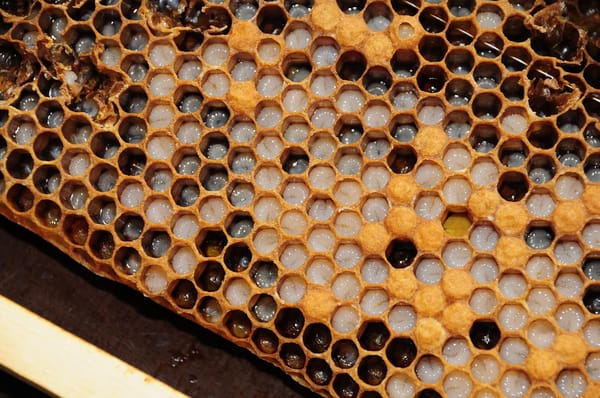
Here's what it looks like: you open your hive and check the brood nest. Instead of seeing frame after frame of wall-to-wall brood as you did last week, you now see something different. There's still brood, but between the patches of capped brood, you see cells filled with nectar and pollen. The brood nest isn't shrinking because the queen has less space. It's shrinking because she's laying less, and the workers are immediately filling those empty cells with food stores.
This is counterintuitive for many beekeepers. We're used to thinking that bees store honey in the supers above the brood nest. When we see honey in the brood frames, we often assume the queen needs more space to lay. But during backfilling, the opposite is true. The queen has plenty of empty cells available. She's just not using them because the workers aren't feeding her enough to maintain peak production.
The queen has plenty of empty cells available. She's just not using them because the workers aren't feeding her enough to maintain peak production.
Backfilling typically appears in that same 2-4 week window before swarming. When you see nectar and pollen appearing in what should be prime brood real estate during spring or early summer, pay attention. Your colony is likely preparing to swarm.
The Pre-Swarm Timeline
Understanding the sequence of events can help you gauge how much time you have to act. While every colony is slightly different, the general progression follows a recognizable pattern.
Week 4 Before Swarm: The decision to swarm is made, often triggered by congestion in the brood nest, strong population, and good foraging conditions. You might not see obvious signs yet, but the colony has committed to the plan.
Week 3-4 Before Swarm: Workers begin reducing the queen's food ration. She starts laying fewer eggs. The first signs of backfilling appear as nectar and pollen start showing up in the brood frames. This is your earliest visible warning sign.
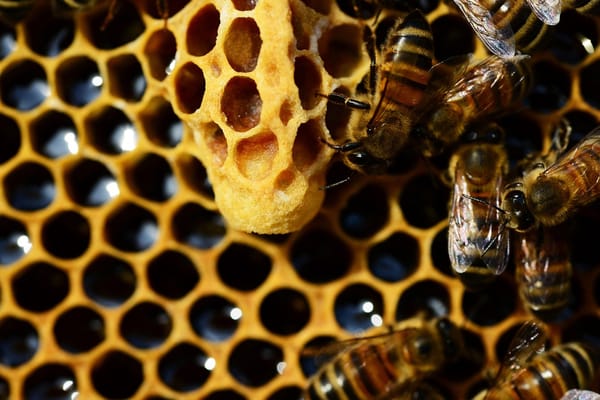
Week 2-3 Before Swarm: The queen's laying has noticeably decreased. Backfilling becomes more pronounced. Workers begin building queen cells, usually along the bottom edges of frames or in the middle of frames where there's good worker bee traffic. These cells start as small cups.
Week 1-2 Before Swarm: The queen's abdomen is visibly smaller. She's more active on the frames and may be harder to spot as she moves around more quickly. Workers continue building out the queen cells. Eggs are laid in some of these cells. The queen's daily egg production may be down by 50% or more from her peak.
Final Week: Queen cells are capped. The timing of cell capping is critical because the swarm typically leaves shortly after the first queen cells are sealed. At this point, the original queen has lost significant weight and is ready to fly. The colony is just waiting for the right weather.
Swarm Day: On a pleasant day, often mid-morning to early afternoon, the old queen and about half the worker bees leave the hive. The remaining bees stay behind with the developing virgin queens.
What to Look For During Hive Inspections
Knowing the timeline is helpful, but you need to know what to actually look for when you open your hives. During swarm season (typically early spring through early summer, depending on your location), weekly inspections are essential. Here's what to focus on.
Frame-by-frame brood assessment: Don't just glance at the brood nest. Pull frames and really look at the laying pattern. Is the pattern solid and compact, with eggs, larvae, and capped brood tightly packed together? Or are you seeing gaps? Are there cells with nectar or pollen mixed in among the brood? The appearance of stores in what should be brood territory is your red flag.
Queen cell inspection: Check the bottom bars of frames and any spots where comb is irregular or built out. Queen cells during swarm preparation tend to cluster in these locations. Early in the process, you'll see small cups. As the swarm approaches, these cups will be drawn out longer and eventually capped. Not every queen cup means a swarm is coming, but multiple cups that are being actively worked on should get your attention.
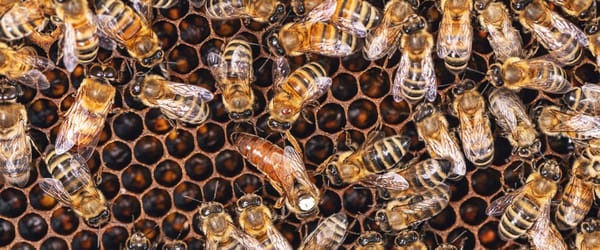
Queen observation: If you can find your queen (always easier if she's marked), take a moment to really look at her. How does her abdomen look compared to earlier inspections? A queen at peak laying has a long, swollen abdomen. A queen preparing to swarm looks slimmer and moves more quickly. This slimming happens because she's fed less by the workers, and workers actively shake and chase the queen in the weeks before swarming, forcing her to lose weight.
Population assessment: Swarm preparation happens in strong colonies. If your hive is packed with bees, especially if they're bearding outside the entrance during the day, population density is high. Combine that with reduced laying and backfilling, and you have a strong swarm indicator.
Nectar flow timing: Pay attention to what's blooming in your area. Colony behavior is closely tied to forage availability. Strong nectar flows often trigger swarm preparation because the colony has the resources to support two colonies instead of one.
Using the Queen's Laying Cycle to Prevent Swarms
Understanding the queen's laying cycle and pre-swarm indicators is only valuable if you use that information to take action. If you catch these signs early, you have several options to prevent the swarm.
Add space early and often: One of the primary swarm triggers is congestion. If you're seeing early signs like reduced laying and initial backfilling, adding another brood box or super can sometimes reverse the swarm preparation. The key word is early. Once queen cells are capped, adding space usually won't stop the swarm.
The key word is early. Once queen cells are capped, adding space usually won't stop the swarm.
Create splits: If your colony is determined to make more bees, work with that instinct rather than against it. You can make a split, removing some frames of brood and bees to create a nucleus colony. This reduces the population pressure in the main hive and can eliminate the swarm impulse. Research on colony dynamics shows that reducing bee density is one of the most effective swarm prevention techniques.
Remove queen cells: Some beekeepers regularly remove queen cells during swarm season. This can work, but it's labor-intensive and timing-dependent. If you're going to do this, you need to inspect every 7-10 days without fail. Miss a week, and those queen cells could be capped and ready to go.
Improve ventilation: Sometimes what looks like congestion is actually a ventilation problem. During hot weather, bees need good airflow. Providing adequate ventilation through screened bottom boards, upper entrances, or temporary ventilation ports can reduce the swarm impulse.
Replace aging queens: Queens that are 2-3 years old are more likely to swarm than younger queens. If you're seeing reduced laying in a queen that's getting up there in age, it might be time for a replacement. Research shows that a young, vigorous queen produces strong pheromones that help suppress the swarm impulse.
The Practical Reality of Swarm Management
You won't prevent every swarm. Even with careful monitoring and all the right interventions, bees sometimes swarm anyway. Swarming is their natural method of reproduction, and it's deeply programmed into their behavior.
That said, by understanding the connection between the queen's laying cycle and swarm preparation, you can catch many swarms before they happen. That 2-4 week window between the first signs of backfilling and the actual swarm event is your opportunity to act. During that time, you can split the colony, add space, remove queen cells, or take other preventive measures.
The key is consistent observation. Understand your queen's normal laying pattern so you can recognize when it changes. Document what your brood nest normally looks like so you can spot backfilling when it appears. This kind of knowledge only comes from regular, thorough hive inspections.
Keep notes on what you see. Take photos if it helps. Track your observations over the season and from year to year. You'll start to recognize the patterns specific to your colonies in your location. Some lines of bees are more prone to swarming than others. Some years, with the right combination of weather and forage, swarm pressure is intense. Other years, it's minimal.
Moving Forward with Better Swarm Prediction
The relationship between queen laying patterns and swarm timing isn't just an academic curiosity. It's practical information that can make you a better beekeeper. By learning to read the signs your queen is showing you, by recognizing backfilling for what it is, and by understanding the pre-swarm timeline, you gain the ability to make informed decisions.
Start this spring by paying closer attention during your inspections. Look for those gaps in the brood nest. Watch for nectar appearing where eggs should be. Notice when your prolific queen suddenly seems to slow down. These aren't signs of problems. They're signs of preparation. Your bees are telling you their plans. The question is whether you're listening.
With practice, you'll get better at reading these signals. You'll learn the rhythm of your colonies and the predictable patterns they follow. You'll still probably lose a swarm here and there. That's beekeeping. You'll lose fewer of them, though, and you'll have more control over when and how your colonies expand. That's the real value of understanding your queen's laying cycle and what it tells you about your colony's intentions.