Queen Development Timing: How It Affects Colony Strength and When to Intervene
Queen development takes exactly 16 days, but the first 36 hours determine everything. Understanding this timeline and recognizing emergency versus supersedure cells helps you decide when to intervene and when to let your colony handle queen replacement on its own.

Every beekeeper eventually faces that moment of uncertainty: your colony seems off, and you suspect the queen might be failing. Should you step in now, or let the bees handle it themselves? The answer hinges on understanding queen development timing and recognizing what your colony can accomplish on its own.
The decisions you make in those critical moments can mean the difference between a thriving hive and a dwindling one. Once you understand the timeline and warning signs, these decisions become much clearer.
Understanding the 16-Day Queen Development Timeline
Queen development operates on a tight schedule. From egg to emergence takes exactly 16 days. That's notably faster than worker bees at 21 days and drones at 24 days. That difference in speed is essentially because queen larvae receive nutrient-rich royal jelly throughout their development. This speed matters because colonies without a functioning queen are on borrowed time.
The most fascinating part of this timeline happens in the first 36 hours after an egg hatches. During this narrow window, any female larva can become either a worker or a queen. The bees haven't made the decision yet. Once that critical period passes, the choice gets locked in by what the larva eats and how it's raised.
The Critical 36-Hour Window for Emergency Queen Rearing
This 36-hour window is why emergency queen rearing works at all. When a colony suddenly loses its queen, worker bees can select very young larvae and begin feeding them royal jelly exclusively. These larvae get moved to specially constructed queen cells, where they'll develop into queens rather than workers.
Age is everything. Research consistently shows that queens raised from 1-day-old larvae produce the highest quality results. The older the larva when selected, the more compromised the resulting queen tends to be. Emergency queens raised from 3-day-old larvae often emerge smaller, with fewer ovarioles, and reduced mating success.
What Determines Queen Quality
Temperature and nutrition determine everything about queen development. The optimal temperature range sits between 91°F/32°C and 95°F/35°C. Even small deviations can affect the outcome. Studies have shown that developing queens exposed to suboptimal temperatures emerge with reduced resilience and reproductive capacity.
Royal jelly is the other critical factor. Unlike worker larvae, which switch to a diet of pollen and honey after three days, queen larvae receive royal jelly throughout their entire development. This protein-rich secretion triggers developmental pathways that lead to the formation of a queen, not a worker. The quality and quantity of royal jelly directly affect the resulting queen's size, ovary development, and her ability to head a strong colony.
When beekeepers talk about queen quality, these developmental factors are what they're really discussing. A queen raised under perfect conditions (from a very young larva, in a strong colony with abundant nurse bees producing plenty of royal jelly) will be noticeably superior to one raised in marginal circumstances.
The data is stark. Research on failing colonies found that queens from stressed hives had approximately 50% sperm viability compared to roughly 85% in queens from healthy colonies. A queen with half the viable sperm will fail much sooner, leaving beekeepers wondering why their young queen is already showing signs of trouble.
How to Read the Signs: Emergency Cells versus Supersedure Cells
Colonies communicate their queen problems in specific ways, and learning to read these signs is essential for timely intervention. Emergency queen cells and supersedure cells look similar, but they signal completely different situations.
Emergency queen cells and supersedure cells look similar, but they signal completely different situations.
Identifying Emergency Queen Cells
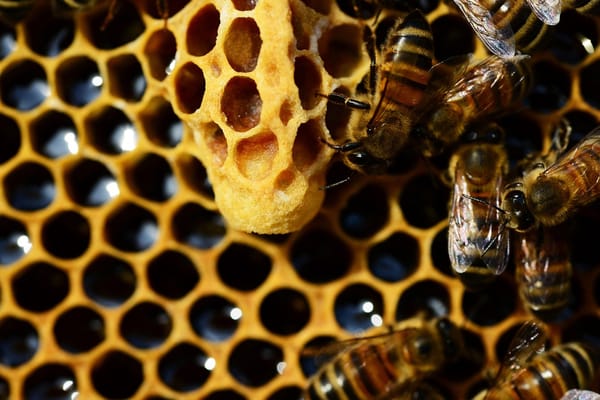
Emergency cells form when a colony suddenly loses its queen. These cells typically appear scattered throughout the brood nest, often on the faces of frames rather than along the bottom bars. The bees build them quickly, sometimes dozens at once, using whatever young larvae they can find. The urgency shows in the construction.
Recognizing Supersedure Cells
Supersedure cells indicate that the colony has decided to replace a failing queen while she's still present. These cells are usually fewer in number (often just two to six) and commonly appear on the bottom or sides of frames. The bees build them more deliberately, and the old queen usually continues laying right up until her replacement begins producing eggs.
The difference matters significantly for how you should respond. A colony in emergency queen mode is queenless right now. They're working against the clock, and whether they succeed depends on the age of available larvae. A colony in supersedure mode is executing a planned transition. They usually know what they're doing.
The timeline also tells you what's possible. If a queen dies or fails suddenly, the colony has roughly six days from when she laid her last egg to begin emergency queen rearing. Any longer than that, and all the available larvae will be too old. That is why a colony that becomes queenless, with no eggs or very young larvae present, cannot save itself. The workers will eventually begin laying unfertilized eggs, producing only drones, and the colony is functionally lost.
When to Intervene: Emergency versus Supersedure Situations
When you spot emergency cells, your first move should be determining why the queen failed. Was she killed during an inspection? Did she fail due to age or poor mating? Is there a disease problem in the hive? Understanding the cause helps you decide whether to let the emergency queens develop or intervene with a replacement.
Letting Emergency Queen Rearing Succeed
If the emergency cells contain larvae of appropriate age and the colony is otherwise strong, the bees can usually succeed on their own. A strong colony with plenty of nurse bees, good food stores, and young larvae has all the ingredients for raising a decent replacement queen. The resulting queen will need to go on mating flights, which adds another 1-2 weeks before she begins laying, but the colony can handle that gap if it's otherwise healthy.
The situation changes if the colony is weak, if available larvae are old, if the season is getting late, or if you have concerns about genetics. In these cases, introducing a mated queen often gives better results. The trade-off is that introducing a queen carries its own risks and requires careful technique to make sure she's accepted.
Managing Natural Supersedure
Supersedure is different. When a colony deliberately replaces its queen through supersedure, it's recognized a problem you might not have noticed yet. Maybe the queen isn't laying well, or her pheromones are weakening, or she's running out of stored sperm. The colony's assessment is usually spot on.
The question is whether to let them complete the process or intervene. Natural supersedure takes 6-7 weeks from when you first notice the cells until a new queen is mated and laying. An introduced mated queen cuts that time to around 4 weeks. Early in the season, the longer timeline might be fine. Later in the year, losing 6-7 weeks of population buildup can seriously impact the colony's winter readiness.
Seasonal Timing for Requeening Success
Seasonal timing determines what's actually practical. August is generally considered the last practical month for requeening in most temperate climates. Any later and you risk not having enough time for the new queen to build up a winter population. A queen introduced or naturally raised in September might begin laying in October, when the colony needs to be preparing for winter rather than expanding.
This timeline pressure is why experienced beekeepers often inspect more frequently during late spring and early summer. Finding and addressing queen problems early in the season gives you options. Finding the same problems in late summer or fall severely limits what you can do.
The recommendation to replace queens every 1-2 years isn't arbitrary. Queen performance declines with age, even when they're still laying. A two-year-old queen typically lays fewer eggs than she did in her first year. Her pheromone production decreases. The stored sperm from her mating flights gradually depletes. Some queens remain productive for three or even four years, but the average performance curve slopes downward after the first year.
Proactive replacement on a schedule gives you control over timing. You can requeen in May or June when conditions are optimal, rather than discovering a failed queen in August when your options are limited. You can select for traits you value rather than accepting whatever genetics the colony produces through emergency or supersedure rearing.
Making the Right Decision for Your Colony
The decision comes down to three factors: colony strength, timing, and available resources. A strong colony early in the season with optimal-age larvae for emergency rearing can succeed on its own. A weak colony late in the season needs immediate intervention with a mated queen to have any chance of winter survival.
The space between those extremes is where judgment comes in. Can your colony afford a 6-7 week supersedure process right now? Do you have mated queens available if you decide to intervene? Will the emergency cells in front of you produce queens of acceptable quality, given the larval age and colony strength?
Understanding the 16-day development timeline, the critical first 36 hours, the factors affecting queen quality, and the seasonal constraints gives you the framework to answer these questions. The bees are remarkably capable of raising replacement queens under the right circumstances. They're also limited by biology and timing in ways that don't care about their determination.
Your job as a beekeeper is to identify the situation you're facing and respond appropriately. Sometimes that means stepping back and letting the colony handle its own queen replacement. At other times, it means intervening quickly with a quality mated queen.