The Long Journey of the Honeybee
Discover the 8,000-year journey of honeybee domestication, from ancient honey thieves to modern beekeepers. Learn how humans transformed wild hive raiding into a sustainable partnership and what it means to join this rewarding tradition today.
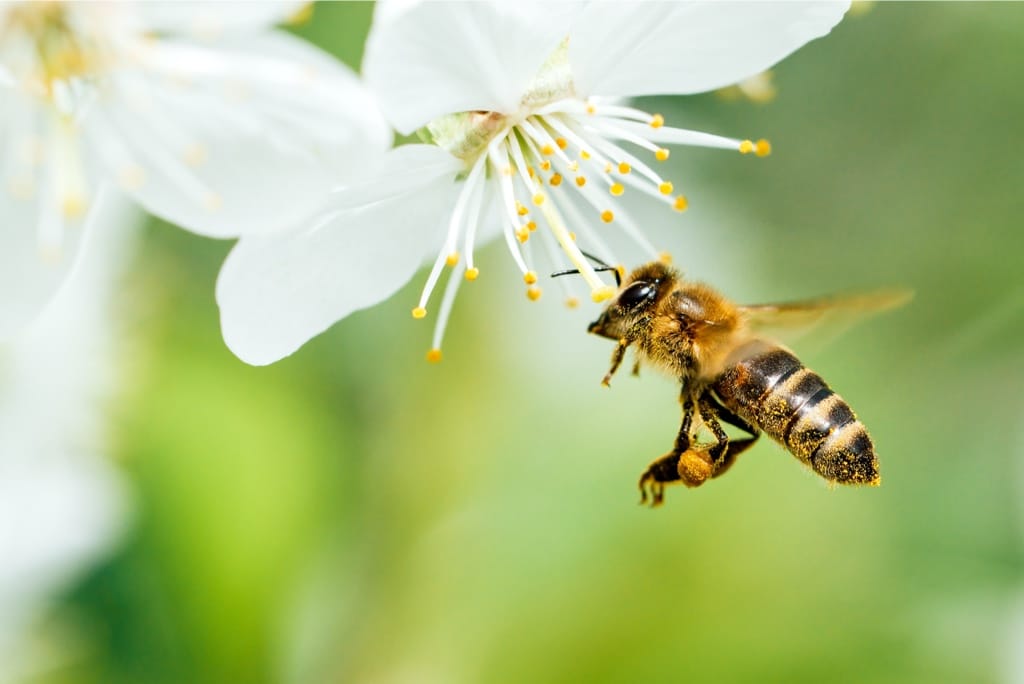
If you're thinking about keeping bees, you're joining a tradition that stretches back thousands of years. The story of how wild honeybees became the domesticated partners we know today is one of patience, observation, and a gradually deepening relationship between humans and these remarkable insects.
Ancient Beginnings
Honeybees existed long before humans took notice of them. The genus Apis evolved somewhere between 25 and 40 million years ago, with the western honeybee (Apis mellifera) emerging in Africa and spreading across Europe and Asia over millions of years. These bees lived as they still do in the wild: building intricate combs inside hollow trees, caves, and rock crevices, storing honey to survive cold winters or periods of scarce forage.
Our ancestors were initially just honey thieves. Rock paintings in the Cuevas de la Araña in Spain, dating back 8,000 years, show a figure climbing to reach a wild hive, surrounded by flying bees. Early humans harvested honey by finding wild colonies, often destroying the hive in the process. This wasn't beekeeping, but it was the beginning of our fascination with these insects and their golden treasure.
The Birth of Beekeeping
True beekeeping, the act of maintaining colonies rather than simply raiding them, began when someone had a crucial insight: if you provide bees with a home and take only surplus honey, they'll stay and produce more. The ancient Egyptians were among the first to figure this out, keeping bees in horizontal clay cylinders as early as 2400 BCE. Reliefs from the sun temple of Nyuserre Ini show beekeepers working with these hives, smoking the bees, and extracting honey. Beekeeping was so important to Egyptian culture that the bee became a royal symbol, appearing in pharaonic titles.
Around the same time, beekeeping developed independently in other regions. Ancient Greeks kept bees in pottery hives and woven skeps. Aristotle wrote extensively about bee behavior in his "Historia Animalium," though he incorrectly believed the queen was male and called her the "king bee." The Romans advanced beekeeping further, with writers like Virgil and Columella producing detailed guides on apiculture. Roman innovations included transparent sections of hive walls made from thin horn, allowing observation without disruption.
The Middle Ages and Fixed-Comb Hives
For most of human history, beekeeping meant fixed-comb hives. Whether made from hollow logs, woven straw (skeps), or clay, these traditional hives shared one characteristic: the bees built their comb directly attached to the hive walls. To harvest honey, beekeepers had to cut away the comb, often killing the colony or severely damaging it in the process.
In medieval Europe, beekeeping became closely associated with monasteries. Monks needed beeswax for church candles and honey for mead and sweetening, as sugar was rare and expensive. They developed more sophisticated methods, including the practice of "driving" bees from one skep to another to harvest honey without killing the colony. Still, beekeeping remained more art than science, guided by tradition and superstition as much as observation.
The Revolutionary Invention: Movable Frames
The transformation of beekeeping from an extractive practice to a sustainable partnership came in the 19th century with the invention of the movable-frame hive. Several inventors worked toward this goal, but the breakthrough came from Lorenzo Langstroth, an American minister and beekeeper, in 1851.
Several inventors worked toward this goal, but the breakthrough came from Lorenzo Langstroth, an American minister and beekeeper, in 1851.
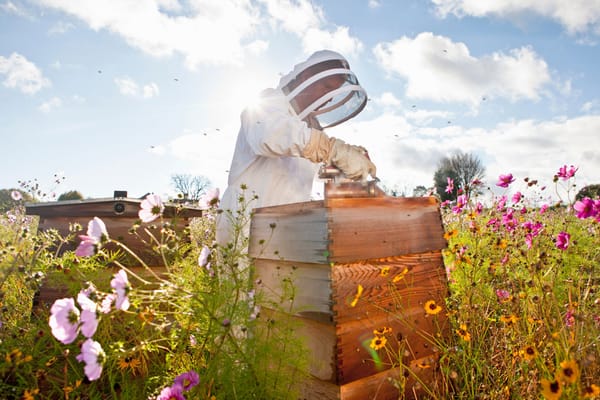
Langstroth discovered what became known as "bee space," the critical gap of roughly 3/8 inch or 8 mm that bees leave as passageways in their hive. Gaps smaller than this, they fill with propolis; gaps larger, they fill with comb. By designing frames that maintained proper bee space on all sides, Langstroth created the first practical movable-frame hive. Beekeepers could now remove individual frames for inspection, harvest honey without destroying comb, manage diseases, split colonies, and understand bee behavior as never before.
This invention democratized beekeeping and made it far more productive. Within decades, the Langstroth hive became the standard across much of the world. Other designs emerged, including the top-bar hive and various vertical hives, but the principle of movable frames revolutionized the craft.
Bees Cross Oceans
The western honeybee is not native to the Americas, Australia, or many other parts of the world where it now thrives. European colonists brought honeybees across the Atlantic starting in the early 1600s. Native Americans called them "white man's flies," recognizing them as harbingers of European settlement. Bees spread across North America, sometimes traveling ahead of settlers, as swarms escaped and established feral colonies.
Similarly, bees were introduced to Australia in 1822, New Zealand in 1839, and other colonies throughout the 19th century. Today, the western honeybee is found on every continent except Antarctica, making it one of the most widespread domesticated animals on Earth.
Today, the western honeybee is found on every continent except Antarctica, making it one of the most widespread domesticated animals on Earth.
Modern Challenges and Adaptations
The 20th and 21st centuries have brought both tremendous advances and serious challenges to beekeeping. On the positive side, we now understand bee biology, genetics, and behavior in extraordinary detail. Modern beekeepers can test for diseases, breed for specific traits, and manage colonies with precision our ancestors couldn't imagine.
However, modern bees face unprecedented pressures. The Varroa destructor mite, which jumped from the Asian honeybee to western honeybees in the mid-20th century, has become the most serious pest affecting bees worldwide. These parasitic mites weaken bees and spread viruses, requiring constant management. Colony Collapse Disorder, first widely reported in 2006, saw mysterious mass die-offs of bees, likely caused by a combination of factors including pesticides, pathogens, poor nutrition, and stress.
Habitat loss has reduced the diversity of flowers available to bees, while industrial agriculture's reliance on monocultures creates feast-or-famine conditions. Pesticides, particularly neonicotinoids, have been shown to harm bees even at sublethal doses. Climate change is shifting bloom times and weather patterns, disrupting the synchrony between flowers and their pollinators.
Where We Are Today
Today's beekeeping world is remarkably diverse. At one end, commercial beekeepers manage thousands of hives, trucking them around the country to pollinate crops like almonds, blueberries, and apples. Pollination services have become as important economically as honey production. At the other end, small-scale beekeepers maintain a few hives in their backyards, part of a growing movement toward local food production, environmental stewardship, and connection with nature.
New approaches continue to emerge. Treatment-free beekeeping seeks to work with bee genetics rather than relying on chemical treatments for mites. Top-bar and Warré hives offer alternatives to Langstroth equipment, emphasizing more natural comb building. Urban beekeeping has exploded in popularity, with hives appearing on rooftops and in community gardens.
Scientific research has revealed the sophistication of bee societies: their complex communication through the waggle dance, their ability to recognize human faces, and their remarkable collective decision-making. We now know that a single bee's brain, smaller than a pinhead, is capable of counting, using tools, and experiencing something that might be analogous to emotion.
An Invitation to Keep Bees
If you're considering becoming a beekeeper, you're not just taking up a hobby. You're joining a lineage that extends back through Lorenzo Langstroth and his revolutionary hive, through medieval monks tending their skeps, through Egyptian beekeepers working clay cylinders along the Nile, all the way back to that anonymous person in prehistoric Spain climbing toward a wild hive with smoke and determination.
The relationship between humans and honeybees has always been reciprocal. We provide shelter and protection; they provide honey, wax, and pollination. But it's more than a transaction. Working with bees connects us to natural cycles, to the flowering of plants and the turning of seasons, to the ancient practice of animal husbandry and the cutting edge of pollinator conservation.
The bees you'll work with carry the legacy of millions of years of evolution and thousands of years of domestication. They face challenges our ancestors never imagined, but they remain fundamentally the same remarkable creatures: social insects that transform nectar into honey, chaos into order, and patient attention into sweet rewards. Your hives will be the next chapter in this long story, and the bees neither know nor care that it began so long ago. They'll simply do what bees have always done, and your job will be to observe, learn, and occasionally harvest the surplus of their industrious lives.
For me personally, keeping bees has been one of the most rewarding things I have done in my life.