Varroa Destructor: Modern Research on Its Impact and How Beekeepers Can Fight Back
Varroa destructor is the most damaging parasite of the Western honey bee. Modern research reveals why this mite is so destructive, how it weakens colonies through feeding and viral spread, and which strategies offer the best chance of long-term control.

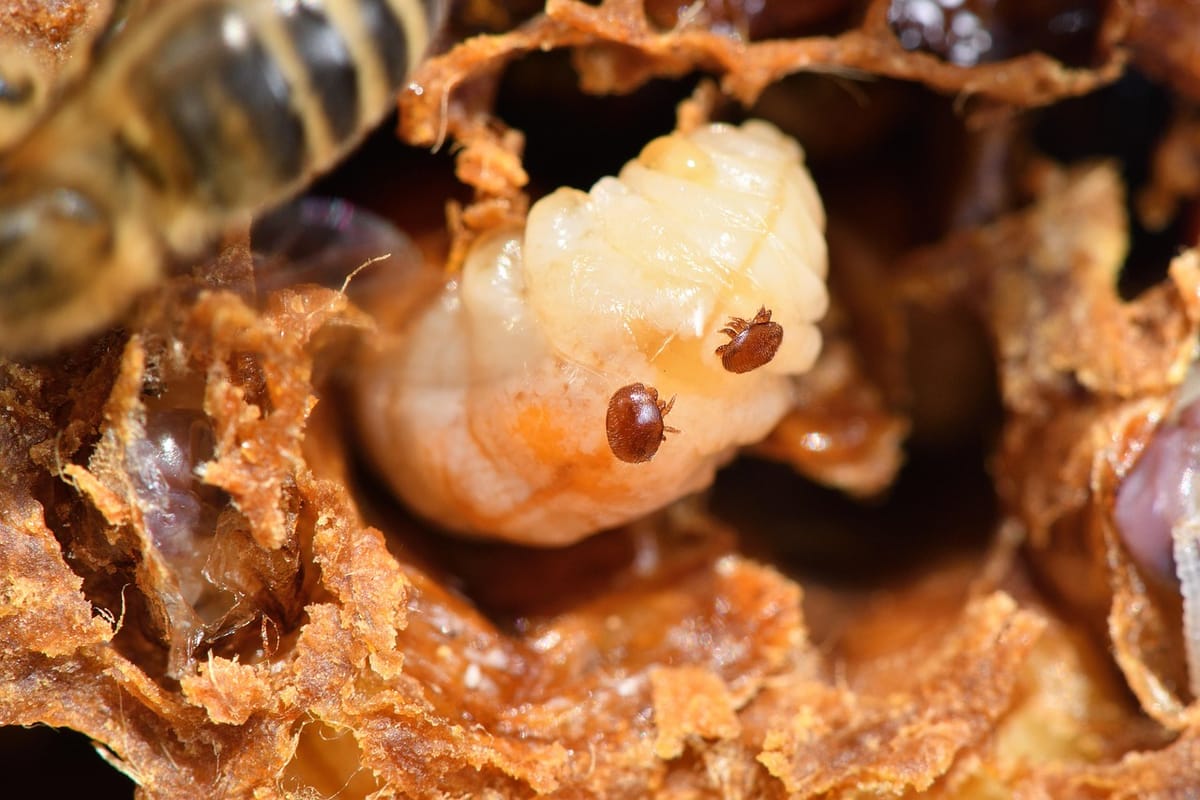
Few forces have reshaped global beekeeping as drastically as Varroa destructor. Originally a parasite of the Asian honey bee Apis cerana, Varroa jumped hosts in the mid-twentieth century and quickly became the single most damaging threat to Apis mellifera.
Modern research shows that its impact is far more complex than simple parasitism. Varroa undermines bee physiology, destabilizes colony behavior, transforms viral landscapes, and evolves resistance at a startling pace. Yet emerging science also reveals exploitable weaknesses that point toward a more sustainable path forward.
Let me walk you through what we know about Varroa, why it's so destructive, and how science can help us fight back.
Why Varroa Is So Destructive
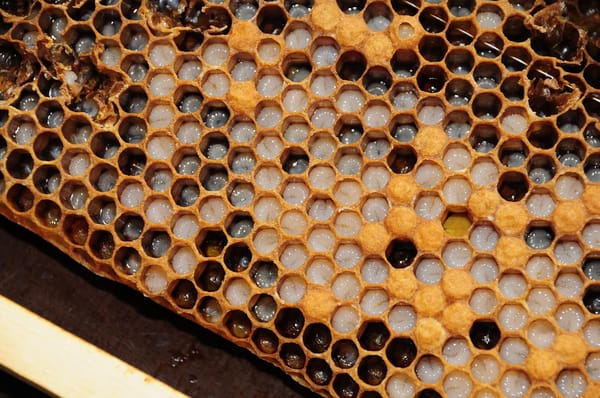
Varroa's life cycle is exceptionally well matched to that of the honey bee. A foundress mite slips into a brood cell shortly before capping, hides in the larval food, and waits until the cell is sealed. Once the larva stretches out to pupate, the mite feeds and begins laying a precise sequence of eggs.
In worker brood, a single invasion typically produces one mature daughter. In drone brood, where development times are longer, she may produce two or more mature daughters, allowing the mite population to grow with alarming speed. The strong preference for drone brood (an eight-fold bias) gives Varroa a reliable reproductive engine throughout the season.
For decades, it was believed that Varroa fed primarily on hemolymph. However, recent work overturned this assumption. Mites feed mainly on the fat body, a critical organ responsible for detoxification, immune function, nutrient storage, hormonal balance, and overwintering survival. The result is a deeper and more systemic form of damage than previously assumed. It undermines bees' ability to fight additional stressors or survive winter conditions.
Varroa's destructive power is amplified further by its role as a viral super-vector. By feeding directly on tissues of developing and adult bees, it injects viruses into the hemocoel, bypassing natural barriers. This dramatically increases viral loads and changes the competitive balance between viral strains.
Research from the Azores, where some islands have Varroa and others remain free of it, shows that mite-infested islands experience sharply higher viral prevalence, higher viral diversity, and dominance of more virulent strains. Previously benign viruses can become widespread and damaging once Varroa arrives, reshaping the viral landscape at the population level.
Compounding these biological advantages is Varroa's adaptability. The mite evolves resistance to miticides rapidly, aided by the consistent use of the same compounds across large geographic areas. Resistance to pyrethroids, coumaphos, fluvalinate, and even amitraz has been documented repeatedly, forcing beekeepers into an unsustainable cycle of treatment escalation.
Finally, Apis mellifera simply lacks the full suite of defenses possessed by Apis cerana, the mite's original host. In A. cerana, mechanisms such as brood-specific "social apoptosis," highly sensitive hygienic behavior, and entombment of infested drone brood effectively suppress mite reproduction. A. mellifera, which never coevolved with Varroa, does not exhibit these same responses, leaving it comparatively defenseless.
The Mite's Hidden Strengths
A significant part of Varroa's success lies in its subtle behavioral and chemical strategies. Varroa can mimic host cuticular hydrocarbons to avoid detection and blends seamlessly into the colony's scent profile. It has sophisticated chemosensory capabilities for identifying larvae at the perfect stage for invasion and even alters the chemical profile of adult bees in ways that encourage dispersal.
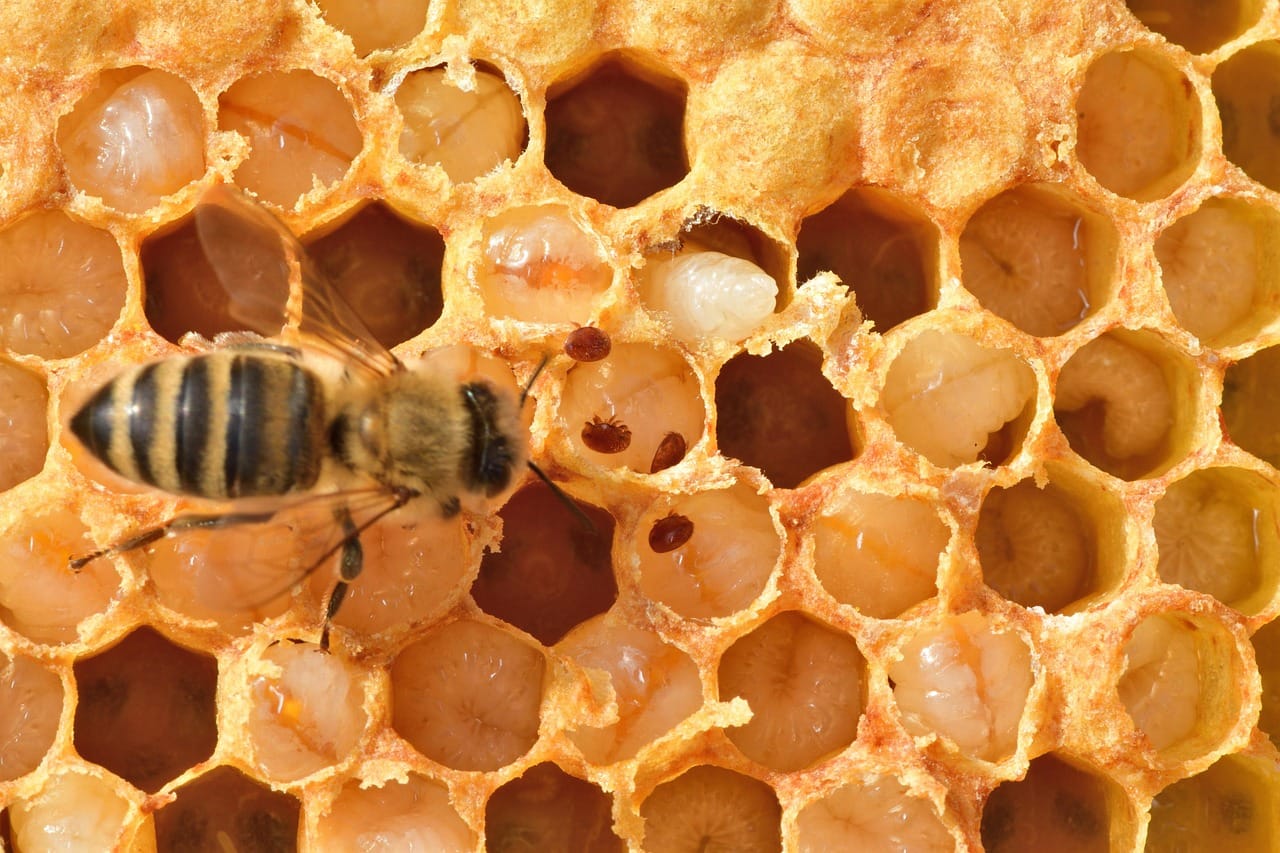
Parasitized bees mature more quickly, drift between colonies more frequently, and contribute less to colony maintenance, behavioral changes that promote the mite's spread and the spread of the viruses it carries.
Even more unexpectedly, Varroa provides parental care inside the brood cell, positioning its eggs and offspring to maximize survival. These traits, rare in mites, further increase reproductive success.
Where Varroa Is Vulnerable
Despite its strengths, Varroa has weaknesses, some already being used in breeding programs and management strategies.
The first vulnerability is its absolute dependence on brood for reproduction. Varroa cannot reproduce without capped brood, which means brood breaks can sharply reduce mite populations. This natural dynamic is visible in feral populations, especially Africanized bees, which tend to swarm frequently, produce brief broodless periods, and maintain smaller brood nests.
Varroa cannot reproduce without capped brood, which means brood breaks can sharply reduce mite populations.
Social immunity also limits Varroa's success whenever it is present with enough intensity. Workers that excel at grooming or mite biting can physically damage mites, and recent research shows that bees often damage Varroa's forelegs, the legs responsible for chemosensing. By removing or shortening these legs, bees impair the mite's ability to locate brood cells, reducing reproductive success significantly.
Hygienic behavior, particularly Varroa Sensitive Hygiene (VSH), is another potent line of defense. Colonies that can detect and remove mite-infested brood interrupt reproduction cycles and suppress mite population growth. This behavior exists naturally at low levels in most colonies but can be actively selected for.
One of the most promising developments comes from breeding programs. Research on the "Pol-line" stock, a line selectively bred for VSH traits, shows that resistant bees can maintain dramatically lower Varroa levels, exhibit lower viral loads, and achieve roughly double the survival rates of standard Italian colonies, even under the intense stress of migratory beekeeping. The study also showed that when Varroa levels are controlled, virus loads alone are not strong predictors of colony death. The parasites themselves, particularly their feeding on fat body tissue, remain the primary driver of mortality. This finding reinforces the importance of selecting for mite-resistant bees rather than focusing solely on virus management.
Winning the Battle Against Varroa
No single tool is enough to control Varroa in modern beekeeping. Chemical treatments remain useful but must be supported by practices that reduce reinfestation and avoid resistance. Integrated pest management (timely monitoring, rotating treatments, drone brood management, and brood breaks) slows population growth and prevents chemical overuse.
Yet the long-term solution will not be chemical. Varroa-resistant bee stocks, whether through selective breeding, naturalized feral populations, or assisted genetic programs, offer the most promising path toward a sustainable balance. The global evidence increasingly shows that when bees possess strong hygienic and grooming behaviors, when brood effects suppress mite reproduction, and when colonies are managed to limit reinvasion events, Varroa becomes a manageable parasite rather than a death sentence.
Varroa has shaped a generation of beekeeping. But its greatest strength, that it evolved faster than our management, can also be turned against it. By selecting for bees that can defend themselves and by aligning beekeeping practices with natural selection rather than against it, we can shift the balance. The research is clear: resistance is possible, heritable, and effective. For the first time in decades, the path to long-term control is becoming visible.
The research is clear: resistance is possible, heritable, and effective.
Resources
- A derived honey bee stock confers resistance to Varroa destructor and associated viral transmission
- Varroa destructor shapes the unique viral landscapes of the honey bee populations of the Azores archipelago
- The Varroa paradox: infestation levels and hygienic behavior in feral scutellata-hybrid and managed Apis mellifera ligustica honey bees
- Varroa destructor and its impacts on honey bee biology
- Varroa destructor: how does it harm Apis mellifera honey bees and what can be done about it?
- Varroa destructor: A Complex Parasite, Crippling Honey Bees Worldwide