What Do Bees Eat? A Guide to Bee Nutrition for Beekeepers
Bee colony health depends on balanced nutrition, not just quantity. Learn what bees eat to thrive, including optimal protein levels, omega ratios, and essential sterols that determine winter survival.

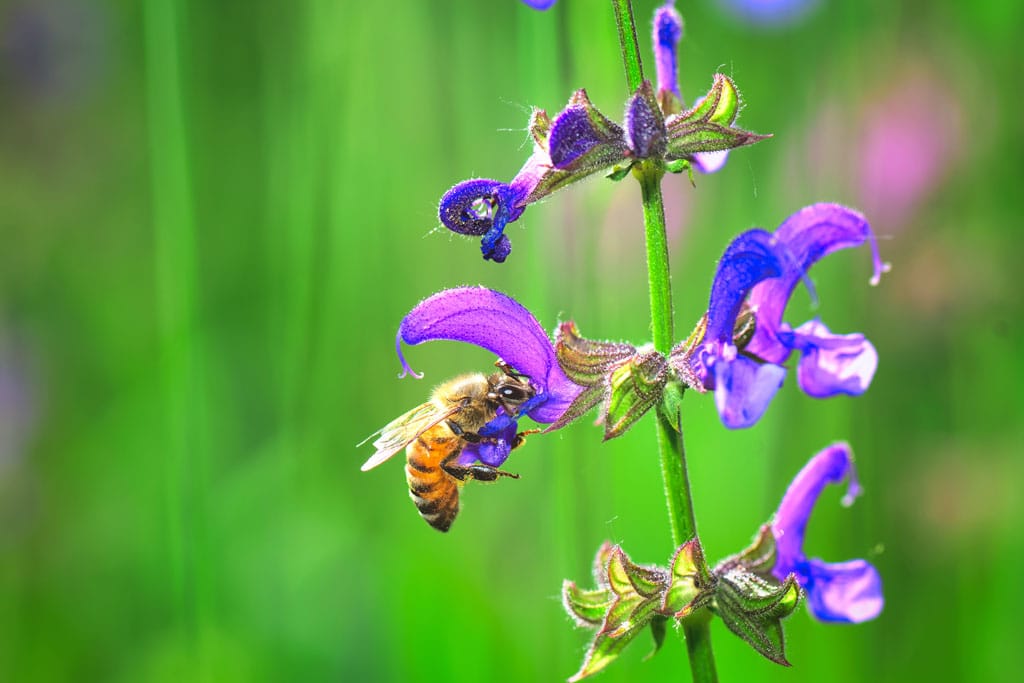
Watch your bees on a warm spring morning. Thousands of fuzzy bodies buzz from flower to flower, pollen baskets bulging. They are gathering the building blocks that determine whether your colony limps through winter or explodes with vigor come spring.
The difference between a colony that thrives and one that merely survives often (not always) comes down to nutrition. It's not just whether bees have enough to eat. It's also about what they're eating, the balance of nutrients in their diet, and when they can access different food sources. It shapes everything from how well your bees learn and navigate to whether they can fight off disease.
The Big Three Macronutrients
Think of bee nutrition like human nutrition. Simply put, we need carbohydrates for energy, proteins for building tissue, and fats for brain function. Honey bees need the same macronutrients, though they source them differently than we do. No surprises there.
Carbohydrates: The Colony's Fuel Source
Nectar is liquid energy. When a forager returns with a full honey stomach, she's carrying carbohydrates as sucrose, glucose, and fructose. The concentration varies wildly by flower, from 5% sugar to 75%, with an average of about 40% worldwide.
A single worker bee needs about 11 mg of dry sugar each day. Scale that up to a large colony of 50,000 bees, and you're looking at substantial daily requirements. Age matters for carbohydrate needs. Foragers consume about 60% more sugar than younger house bees aged 0-14 days. Flying is expensive, energetically speaking. Those long trips to distant flower patches demand serious fuel.
Proteins: Building Bodies and Feeding Babies
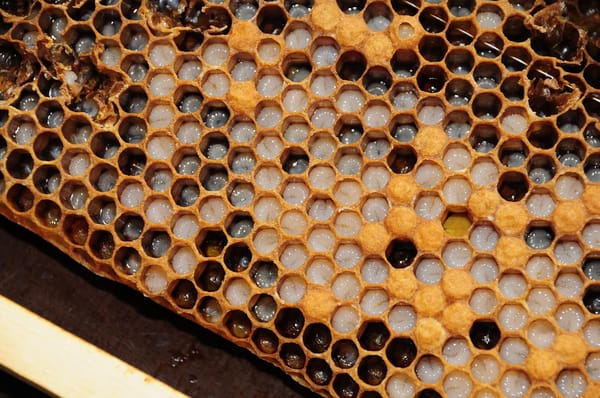
Open a frame packed with colorful pollen, and you're looking at the colony's protein warehouse. Unlike nectar, which provides simple energy, pollen delivers the complex amino acids bees need to build bodies, develop glands, and produce the royal jelly that feeds larvae.
Adult bees need approximately 3.4-5.4 mg of pollen daily. Each larva requires between 125-187.5 mg of pollen during development. Given that a thriving colony might rear thousands of larvae during peak season, the protein demand adds up quickly.
Not all pollen is created equal, though. Protein content varies dramatically by plant species. Rapeseed (Brassica napus) ranges from 22-27%, sunflower (Helianthus annus) contains approximately 15%, and buckwheat (Fagopyrum) has just 11.4%. Spring flowers generally offer more protein-rich pollen, while late summer flowers tend to be richer in fats and carbohydrates.
The sweet spot for colony reproduction appears to be pollen containing 21-27% protein. Research demonstrates that maximum population growth occurs with about 31.7% crude protein. Interestingly, too much protein becomes counterproductive. Feed bees a diet with 38.5% protein or higher, and you'll see undigested material accumulating in their guts rather than improved health.
What really matters isn't just total protein but the specific amino acids within it. Bees require ten essential amino acids: arginine, histidine, isoleucine, leucine, lysine, methionine, phenylalanine, threonine, tryptophan, and valine. Among these, isoleucine often becomes the limiting factor.
Feed your bees protein-rich pollen like raspberry or blackberry and you'll see nurse bees with beautifully developed hypopharyngeal glands, the structures that produce royal jelly. Studies show these well-fed bees express higher levels of vitellogenin and transferrin, proteins critical for immunity and reproduction. At the colony level, the difference is striking. Colonies fed a 34% protein diet can produce anywhere from 22,420 to 29,519 workers, significantly outpacing colonies on lower-protein diets.
Lipids: The Forgotten Essential
For too long, beekeepers focused almost exclusively on protein and carbohydrates. Recent research has revealed that fats, particularly the right balance of fatty acids, play a critical role in bee health.
Pollen contains between 3% and 20% lipids depending on the plant species. Research suggests approximately 8% lipid content produces optimal results. Like humans, bees cannot synthesize certain essential fatty acids. They must obtain linoleic acid (omega-6) and α-linolenic acid (omega-3) from their diet.
The ratio between these omega fatty acids matters. The best performance occurs at an omega-6 to omega-3 ratio of 1:1 at about 4% total lipid concentration. The most detrimental ratio appears to be 5:1, heavily skewed toward omega-6. Many managed colonies increasingly forage in landscapes dominated by crops that provide exactly this problematic high omega-6 profile.
Omega-3 deficiency doesn't just impact physical development. It greatly impairs honey bee learning, affecting their ability to remember flower locations, communicate effectively through waggle dances, and navigate back to the hive. High omega-6 to omega-3 ratios delay the onset of nursing behavior, reduce the rate of nursing visits, and result in smaller hypopharyngeal glands.
The frustrating part is that five commercial supplements tested in one study had low omega-3 and were unbalanced with omega-6 to omega-3 ratios exceeding 6, far worse than natural pollen. They simply don't fully support colony health.
Essential Micronutrients for Honey Bee Health
Macronutrients get most of the attention, and rightfully so, given the quantities bees need. That said, the micronutrients are what make everything else function. Think of them as the mechanics keeping the engine running smoothly.
Vitamins: Daily Essentials
Pollen contains between 0.02% and 0.7% total vitamins. These percentages might seem small, but the impact isn't.
B-vitamins are particularly critical. They regulate macronutrient uptake and act as enzyme precursors that maintain internal metabolism. Because they're water-soluble, bees need to replenish them daily from dietary sources.
When bees ferment pollen into bee bread, something remarkable happens. The fermentation process significantly elevates B vitamins like B1, B2, B6, and folic acid. Vitamin K appears for the first time after fermentation, not present in unfermented pollen. Vitamin E and carotenoids also show up in higher concentrations.
The practical impact shows up in disease resistance. Worker bees fed a diet supplemented with a combination of vitamins, minerals, and amino acids had significantly reduced numbers of Nosema spores compared to control groups.
Minerals: The Overlooked Necessity
Have you ever watched bees clustering around a muddy puddle when you've got perfectly clean water available nearby? This confused me for the longest time. They're not being perverse. They're mining minerals.
Bee pollen contains a range of minerals. The major elements include potassium, phosphorus, sulfur, calcium, and magnesium. Trace minerals like iron, zinc, manganese, and copper appear in smaller amounts but remain essential.
Seasonal preferences shift dramatically. During summer, bees show a strong sodium preference, followed by potassium and magnesium. After consuming sodium, honey bees show significantly more foraging activity, collect more pollen, and maintain a larger brood area. In winter, they shift to consuming more potassium. During autumn, when pollen becomes scarce, bees prioritize water containing calcium, magnesium, and potassium.
This isn't academic. Research shows colonies provided with sodium chloride during summer collected significantly more pollen and maintained larger brood areas. Potassium showed the opposite pattern, with winter consumption nearly doubling summer intake.
Sterols: The Essential Building Blocks
Among all nutrients, sterols might be the least understood yet most critical. Bees cannot synthesize these compounds and must obtain them from pollen.
A key player is 24-methylenecholesterol. Laboratory research on developing prepupae demonstrates that this sterol is essential for honey bee survival. In controlled feeding studies, prepupae supplemented with 24-methylenecholesterol survived to 12 weeks, while all other feeding groups died by 8 weeks. This highlights the critical importance of this sterol for brood development.
Bees require multiple essential sterols, each with distinct roles. Cholesterol and campesterol serve as precursors for molting hormones (ecdysteroids like 20-hydroxyecdysone and makisterone A), which control metamorphosis and development. Isofucosterol and 24-methylenecholesterol serve primarily as components of cellular membranes and are critical for brood production.
This is where many commercial pollen substitutes fall short. They may have adequate protein levels but lack the essential sterols needed for brood development.
Polyfloral Diets and Disease Resistance
Single-source pollen, no matter how high quality, creates nutritional deficiencies. The solution isn't just variety for variety's sake. Different pollens provide different nutrient profiles that complement each other.
Research demonstrates that colonies with access to polyfloral diets show enhanced disease resistance compared to those restricted to monofloral sources. The mechanism appears multifaceted: diverse pollen provides complete amino acid profiles, balanced omega ratios, adequate sterols, and varied secondary metabolites with antimicrobial properties.
Monoculture crops create serious problems. Rapeseed dominates many agricultural landscapes. While it provides abundant pollen at approximately 27% protein, relying solely on this source creates imbalances. Similarly, Eucalyptus pollen shows poor omega ratios (5:1 to 26:1), yet bees may have little choice when it dominates the landscape.
What is the practical implication? If your bees forage primarily in monoculture areas, supplementation becomes essential. But keep in mind that supplementation must address the specific deficiencies of the dominant forage, not just provide generic "bee food."
Seasonal Feeding Strategies
What we learned so far is that bees' nutritional needs shift significantly throughout the year. Understanding the seasonal requirements lets you provide targeted support when it matters most. What does that mean in practice? Let's break this down by season.
Spring: Explosive Growth
Spring is all about explosive growth. Colonies need high-protein diets to stimulate brood production and build populations. Natural spring flowers typically provide pollen with higher concentrations of protein and omega-3 fatty acids.
If natural pollen isn't available yet, pollen-based patties work well. Substitutes can suffice, though they're never quite as good as the real thing. Feed 1:1 sugar syrup to help colonies build comb and prepare for brood rearing.
Summer: Let Nature Work
Summer is when you mostly get out of the way. Colonies should thrive on natural forage. The focus shifts to nectar and pollen collection. Water becomes critical for cooling as temperatures rise.
Only feed patties if you're experiencing a real dearth and bees lack enough stores to survive. Otherwise, bees always favor natural pollen over supplements, and for good reason. Natural pollen provides those essential sterols and balanced omega ratios that supplements struggle to match.
Make sure bees have access to water. When temperatures rise, they don't just drink it. They fan it throughout the hive for evaporative cooling. A clean, shallow water source near the apiary is ideal, though don't be surprised if they also seek out less pristine sources for the minerals.
Fall: Preparing for Winter
Fall feeding has one overriding goal: prepare the colony to survive winter. Feed supplemental thick syrup (two parts sugar to one part water) to ensure adequate carbohydrate stores. Make sure bees have access to protein because the quality of your fall nutrition determines the quality of your winter bees.
Starting in late summer, colonies begin rearing a different kind of bee. Winter bees are physiologically distinct from summer bees. They are long-lived workers with larger fat bodies that provide nutritional reserves needed to survive winter.
Fall pollens in temperate regions tend to have high levels of lipids that can be stored in those fat bodies during winter confinement. Feed 2:1 syrup to provide concentrated carbohydrates. Ensure adequate protein for winter bee development. This is not the time to skimp.
Winter: Hands Off
Winter is about letting your bees rest and conserve energy. Colonies cluster and live off their reserves. Brood rearing is minimal or nonexistent.
Colonies need substantial stored honey going into winter. You can provide dry sugar or fondant as emergency feed in colder regions. The biggest winter killer isn't cold. It's starvation. Sometimes it's not even a lack of total food but rather "isolation starvation." Bees run out of food on the frames they're clustering on, and it's too cold for them to break cluster and move to other frames where honey is available. They can starve within inches of abundant stores.
Practical Takeaways
Understanding bee nutrition is valuable. Applying that knowledge is what keeps colonies alive and productive.
Prioritize diversity. Plant a variety of flowers around your apiary. Choose species that bloom at different times. Spring bulbs, summer perennials, fall asters. Each contributes different nutrients. No single pollen source provides complete nutrition, and polyfloral diets dramatically improve disease resistance.
Protein quality matters more than quantity. If you're supplementing, target 29.5-34% crude protein, with 31.7% being optimal. Make sure all ten essential amino acids are present, watching particularly for isoleucine as the limiting factor. Don't assume that more is better. Protein levels above 38.5% become counterproductive. If you're using commercial supplements, consider adding 5-10% natural pollen to make up for deficiencies.
Pay attention to omega ratios. This is where many commercial supplements fall short. Aim for a 1:1 omega-6 to omega-3 ratio in feeds with approximately 8% lipid content. Poor omega ratios lead to cognitively impaired bees with navigation problems and delayed nursing behavior.
Don't ignore sterols. Pollen substitutes lacking isofucosterol and 24-methylenecholesterol have an impact on brood production. That is why many commercial substitutes fail despite seemingly good protein numbers. Always include some natural pollen in any substitute feeding program.
Match feeding to seasons. In spring, use high-protein patties (30-34%) and 1:1 sugar syrup for comb building. In summer, let bees forage naturally unless you're in a real dearth. In fall, feed 2:1 sugar syrup and ensure protein for winter bee development. In winter, provide emergency solid feed only and make sure you left adequate stores.
Think about water and minerals. Provide multiple water sources, ideally with varying mineral content. In summer, sodium is critical for foraging activity and brood production. In winter, bees prefer potassium. During the fall, when pollen is scarce, calcium, magnesium, and potassium in water become important. Let bees self-select their mineral needs by offering choices.
Remember that nutrition affects multiple generations. An undernourished generation has a shortened lifespan, which creates cascading failure. Bees start foraging early, young bees aren't physiologically ready for that work, more early deaths occur, and colony collapse accelerates. Poor nutrition effects don't recover easily and persist into spring.
Know when to supplement and when to step back. Supplement early spring before natural pollen is available, during dearths, in fall for winter bee development, when colonies are in monofloral areas, and after splits. Don't supplement when natural, diverse forage is abundant or during summer unless there's a dearth. Check omega ratios, sterol content, and amino acid profiles before buying commercial feeds.
I imagine that you feel overwhelmed after reading this. Don't be. Your bees can mostly take care of themselves, but understanding the details and nuances of bee nutrition is very helpful. It avoids surprises and helps you when you do need to step in to help out a colony.
The difference between survival and thriving isn't mysterious. It comes down to giving bees access to the macro- and micronutrients they need, in the right ratios, at the right times. Do that, and you're not just keeping bees alive. You're giving them what they need to truly flourish.