What Happens When Brood Development Goes Wrong
Understanding what can go wrong during the first 21 days of bee development is essential for keeping colonies healthy. From temperature problems to disease, nutritional deficits to queen failure. Learn to recognize warning signs early.
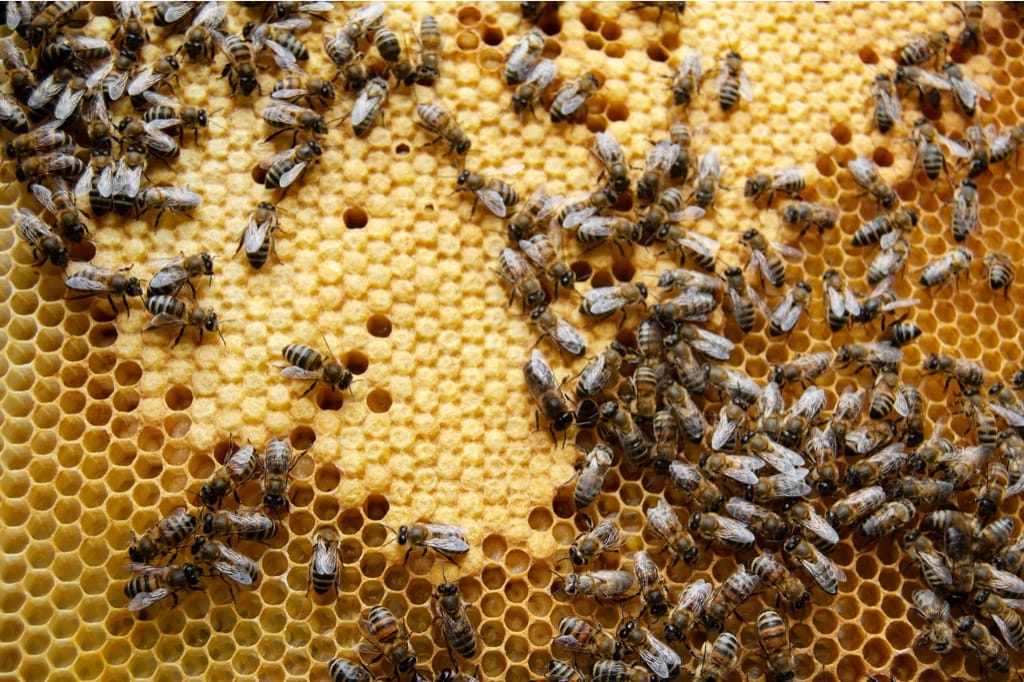
Every beekeeper knows the rhythm: egg to larva to pupa to bee. Twenty-one days for a worker, twenty-four for a drone, sixteen for a queen. These numbers are so fundamental to beekeeping that we recite them almost without thinking. But what happens when this carefully orchestrated development goes awry?
Twenty-one days for a worker, twenty-four for a drone, sixteen for a queen.
Understanding what can go wrong during brood development isn't just academic. It is essential for keeping your colonies healthy and productive. The first three weeks of a bee's life are when colonies are most vulnerable to problems that can cascade through the entire hive.
The Perfect Timeline (When Everything Goes Right)
Before we explore what can go wrong, let's set the baseline. A worker bee's development follows a precise schedule:
Days 1-3: The egg stage. A tiny white egg stands upright in the cell, gradually tilting until it lies flat on day three.
Days 4-9: The larval stage. The egg hatches into a small white larva that floats in royal jelly. Worker bees visit thousands of times, feeding and checking on the growing grub. The larva grows exponentially, molting several times as it outgrows its skin.
Days 10-21: The pupal stage. The cell is capped with a porous wax covering. Inside, the larva spins a cocoon and begins its transformation. Eyes develop. Wings form. The white grub gradually darkens, taking on the familiar shape and color of an adult bee.
On day twenty-one, a new worker chews through the capping and emerges into the hive, ready to begin her life's work.
When Development Stalls: Temperature Problems
Brood needs consistent warmth, around 95°F or 35°C, to develop properly. When temperatures drop, even briefly, development slows or stops entirely. In spring, when colonies are building up but nights are still cold, small colonies may struggle to maintain proper brood nest temperature.
The result? Development can stretch to twenty-three or even twenty-four days for workers. These bees emerge undersized, with shorter lifespans and reduced foraging ability. They may have deformed wings or underdeveloped glands. A colony already struggling to build its population now has substandard workers who contribute less and die sooner.
In early spring, it is possible to find patches of chilled brood, cells where larvae stopped developing and died. The nurse bees remove these casualties, but each represents lost potential at a time when the colony can least afford it.
Nutritional Deficits: Starvation in Plain Sight
Developing larvae have enormous nutritional needs. A single larva is fed up to 1,300 times during its development and gains 1,500 times its original weight. When nectar and pollen are scarce, or when the ratio of nurse bees to brood is too low, larvae may receive inadequate nutrition.
Malnourished larvae develop into smaller adults with compromised immune systems and shorter lifespans. In severe cases, worker bees may remove larvae before they even reach the pupal stage. The colony's harsh calculation that it's better to cut losses than invest further resources in brood that won't develop into healthy bees.
This is why monitoring your colony's stores matters so much. That frame of untouched honey isn't just insurance against starvation. It is fuel for raising the next generation.
Disease and Parasites: The Invisible Threats
The brood cell is supposed to be a sanctuary, but it can become a trap when disease strikes.
American Foulbrood (AFB) kills larvae after the cell is capped, leaving behind a brown, ropy mass with a distinctive foul smell. The spores persist for decades, making infected equipment dangerous long after the colony is gone.
European Foulbrood (EFB) strikes earlier, killing larvae before capping. Unlike AFB, colonies can sometimes recover from EFB, but it leaves them weakened and struggling.
Chalkbrood turns dead larvae into hard, chalk-like mummies. It thrives in cool, damp conditions and often appears in spring when colonies are most stressed.
Varroa mites deserve special mention. These parasites enter cells just before capping and reproduce while feeding on developing pupae. Infested bees emerge with deformed wings, shortened abdomens, and weakened immune systems. Heavy Varroa infestations can devastate a colony's population, creating a death spiral where too few healthy bees emerge to replace dying workers.
Queen Problems: When the Foundation Crumbles
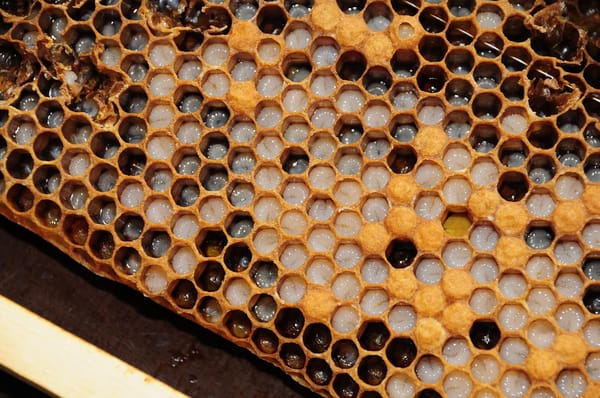
Sometimes the problem isn't with the brood, but with the queen laying it. An aging or poorly mated queen may lay drone eggs in worker cells, creating a "shotgun" brood pattern with scattered cells of capped brood instead of solid frames. She may skip cells entirely or lay multiple eggs per cell.
A failing queen can also run out of stored sperm, leading to unfertilized eggs that can only develop into drones. A frame that should be solid worker brood instead becomes patchy drone brood, and the colony's population plummets as drones can't perform the essential tasks that keep the colony functioning.
Pesticides: The Chemical Intruders
Agricultural chemicals can disrupt brood development in ways that aren't always immediately obvious. Some pesticides don't kill adult bees but affect their ability to produce brood food or cause behavioral changes in nurse bees. Others accumulate in wax and continue to affect the developing brood long after exposure.
Larvae exposed to sublethal pesticide doses may develop into adults with impaired learning abilities, compromised immune systems, or shortened lifespans. The colony appears healthy at first glance, but the slow erosion of bee quality eventually catches up.
Recognizing the Warning Signs
Healthy brood has a characteristic pattern: solid frames of capped cells in concentric arcs, with younger larvae closer to the edges. The cappings are smooth and slightly convex. When you see deviations from this pattern, pay attention:
- Spotty or "shotgun" brood patterns suggest queen problems
- Sunken or perforated cappings indicate disease
- Dead larvae twisted in cells or discolored may signal foulbrood
- White or black mummified larvae indicate chalkbrood
- Larvae removed from cells and discarded at the entrance suggest nutritional stress
What You Can Do
Understanding what can go wrong is only helpful if it leads to action. Here's how to support healthy brood development:
Maintain strong populations. Larger colonies better regulate temperature and have more nurse bees per larva. This is why spring splits can sometimes backfire. Two weak colonies may struggle where one strong colony would thrive.
Ensure adequate nutrition. Monitor stores and supplement when necessary. Pollen patties in early spring can prevent nutritional deficits when natural pollen is scarce.
Manage Varroa ruthlessly. Test regularly and treat when necessary. Every beekeeper develops their own approach, but ignoring Varroa is not a viable strategy. You need to know, at the very least, what kind of Varroa pressure your colony is facing.
Monitor queen quality. A good queen is the foundation of a healthy colony. Requeening at the first sign of failure prevents problems from compounding.
Minimize pesticide exposure. Know what's being sprayed near your bees. Talk with neighboring farmers and gardeners. Plant forage that gives your bees clean alternatives.
The Resilience of the Superorganism
Despite all that can go wrong, colonies often recover from setbacks that would doom an individual organism. Bees evolved to handle challenges, and a strong colony can compensate for temporary problems through the collective action of thousands of individuals.
But resilience has limits. Problems during brood development compound quickly, and a colony that seems fine in May may be failing by July if issues go unaddressed. The three weeks of brood development aren't just about individual bees. They are about the colony's ability to replace its workforce, respond to opportunities, and survive through the lean times.
When you open a hive and see frames of healthy, capped brood in solid patterns, you're seeing more than future bees. You're seeing successful coordination between queen, workers, and environment. You're seeing a colony that has the foundation to thrive.
And when something looks wrong? That's your opportunity to intervene before a small problem becomes a crisis. Because in beekeeping, as in so much of life, prevention is far easier than cure.