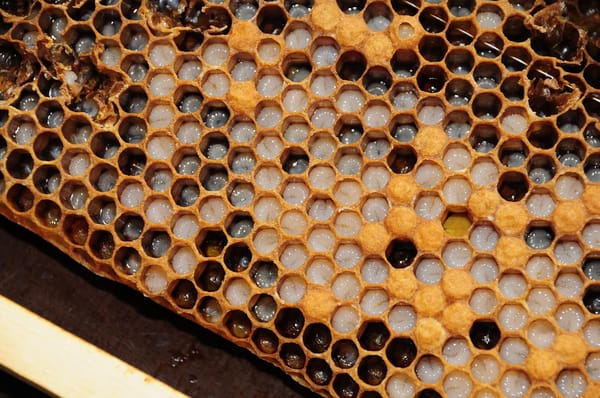
What's Happening on Your Landing Board?
Bees wrestling at your hive entrance? Learn to decode unusual landing board behavior, from robbing and drone eviction to balling and washboarding. Discover what's normal, when to intervene, and how to keep your colony strong.
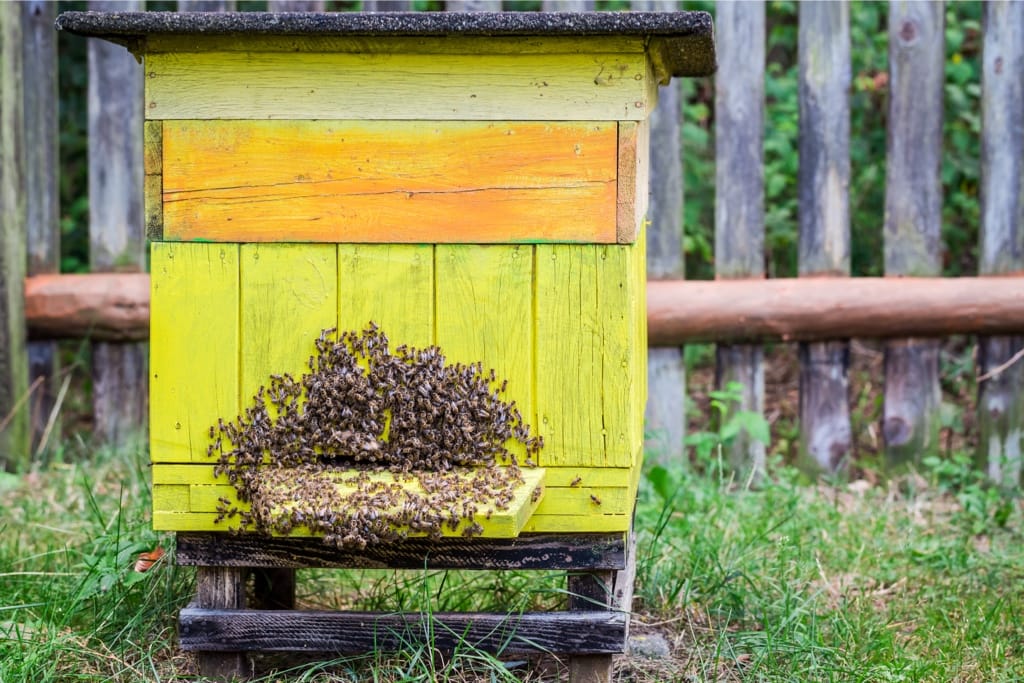
Every beekeeper has experienced that moment of concern: you approach your hive for a routine check, and something just looks different at the entrance. Bees are wrestling, tumbling off the landing board, or clustering in ways you haven't seen before. Your first instinct might be to worry, but these behaviors are often your colony's way of communicating what's happening inside or around the hive.
Understanding what you're seeing on the landing board is one of the most valuable skills a beekeeper can develop. It's where your bees interact with the outside world, and it's often the first place problems reveal themselves.
The Landing Board: Your Hive's Front Door
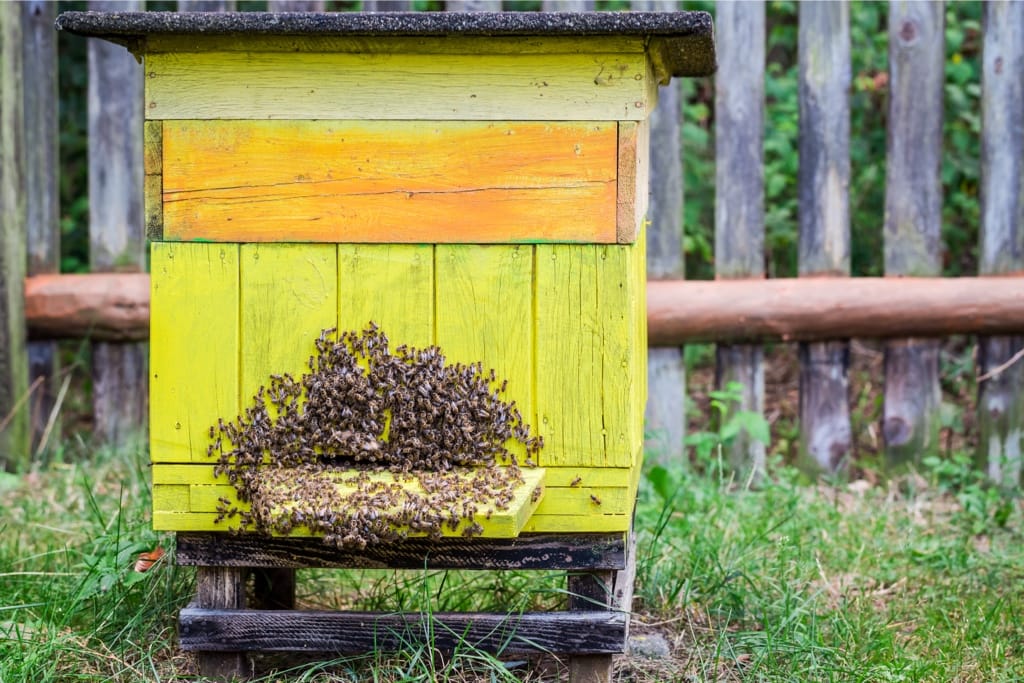
The landing board isn't just an architectural feature. It's a bustling hub of activity where returning foragers land with pollen and nectar, guard bees scrutinize every arrival, and the colony's health becomes visible. When behavior shifts from the normal hum of traffic to something more chaotic or aggressive, it's worth paying attention.
Common Unusual Behaviors
Wrestling and Tumbling: Robbing or Defense
What you see: Bees grappling with each other, often rolling off the landing board entirely. The entrance area looks tense, with more guard bees than usual and aggressive posturing.
What's happening: This is typically a defensive response. Your colony is likely fending off robber bees, foragers from other hives (or even feral colonies) trying to steal honey. Robbing is most common in late summer and fall when natural nectar sources dry up, but it can happen anytime there's a strong colony near a weak one.
Clues:
- Time of year: Late summer and fall are prime robbing season
- Weather: Robbing intensifies during nectar dearths
- Nearby activity: Bees hovering near the entrance, trying different entry points, flying in zigzag patterns (robbers are often hesitant and searching)
What to do: Reduce the entrance to help guard bees defend more effectively. Check for any spilled syrup or open honey that might be attracting attention. If robbing is severe, consider screening the entrance for a day or two to break the robbers' pattern.
Dragging Out Larger Bees: Drone Eviction
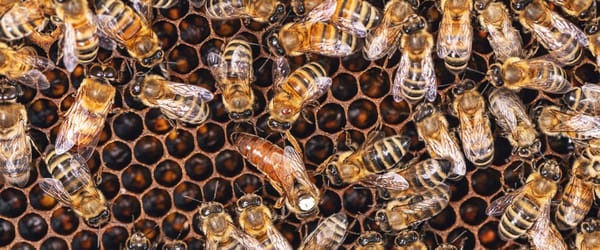
What you see: Worker bees hauling bigger, fuzzier bees toward the entrance and unceremoniously dumping them off the landing board. The ejected bees may try to crawl back in, but are repeatedly pushed away.
What's happening: This is drone eviction, and it's perfectly normal behavior as the colony prepares for winter. Drones don't contribute to hive chores and consume valuable resources. When the colony senses that nectar flow is ending and winter is approaching, workers evict drones to conserve honey stores.
Clues:
- Time of year: Typically late summer into fall
- Who's involved: The larger bees being dragged out are drones (bulkier bodies, larger eyes, no stinger)
- Colony mood: The workers are methodical, not frantic
What to do: Nothing. This is a natural preparation for winter and actually a good sign that your colony is managing resources wisely. If you're seeing drone eviction, make sure your hive has adequate honey stores for the coming months.
Balling Behavior: A Queen or Intruder Under Attack
What you see: A tight ball of bees clustered on the landing board or just inside the entrance. The cluster is tense, with workers piling on top of each other around a central target.
What's happening: The colony is attacking an intruder, or in rare cases, their own queen. Balling is a defense mechanism where workers surround a threat, raising the temperature and suffocating it. This can happen to a foreign queen trying to enter, a wasp, or sometimes a newly introduced queen that the colony hasn't accepted.
Clues:
- Recent changes: Did you recently introduce a new queen or combine colonies?
- What's inside: Carefully (and gently) breaking apart the ball can reveal what's at the center
- Colony temperament: Sudden aggression after a period of calm might indicate queen issues
What to do: If you suspect it's an intruder (like a wasp), let the bees handle it. If you recently introduced a queen and see balling, you may need to intervene by gently breaking up the ball and re-caging the queen to slow the introduction process.
Washboarding: Mysterious and Harmless
What you see: Lines of bees on the landing board or hive front, rocking back and forth in a synchronized motion. It looks almost like they're scrubbing the surface.
What's happening: Despite decades of observation, washboarding remains one of beekeeping's endearing mysteries. Theories range from cleaning and polishing the hive surface to communication or simply a way to pass the time. Whatever the reason, it's completely harmless and often observed on warm, calm evenings.
Clues:
- Time of day: Usually late afternoon or evening
- Weather: Warm, pleasant conditions
- Colony mood: Relaxed, no signs of stress
What to do: Enjoy the show. This is one of those behaviors that reminds us how much we still have to learn about bees.
Fanning at the Entrance: Temperature Regulation
What you see: Bees lined up at the entrance with their abdomens raised, wings beating rapidly. The entrance might look crowded, but organized.
What's happening: The colony is regulating hive temperature and humidity. In hot weather, bees fan air through the hive to cool it down and evaporate excess moisture from nectar. You might also see this behavior after a heavy nectar flow when bees are working hard to cure honey.
Clues:
- Weather: Hot, humid days
- Time of year: Peak foraging season
- Hive orientation: South-facing hives in full sun may fan more intensely
What to do: Ensure your hive has adequate ventilation. If fanning is constant and extreme, consider providing shade or adding ventilation (like a screened bottom board or upper entrance).
How to Diagnose What You're Seeing
When you notice unusual behavior on the landing board, take a moment to collect information before jumping to conclusions.
- Observe the season: Many behaviors are seasonal. Drone eviction in spring would be unusual. In the fall, it's expected.
- Check the participants: Are they all workers? Are drones involved? Is there a larger bee (possibly a queen) at the center of activity?
- Look at the pattern: Is the behavior focused on the entrance, or is it happening across the landing board? Are bees coming and going normally, otherwise?
- Consider recent changes: Did you just inspect the hive? Add a super? Introduce a queen? Bees react to our interventions.
- Smell the air: Alarm pheromone has a distinct banana-like smell. If you detect it, the colony is on high alert.
When (Not) to Intervene
Not every unusual behavior requires intervention. Bees have been managing their colonies for millions of years, and they're remarkably good at it. Here's a simple framework.
Let them handle it
- Drone eviction
- Washboarding
- Routine defense against a single robber or wasp
- Normal fanning on hot days
Keep an eye on it
- Increased guard activity that might indicate early robbing
- Orientation flights (new bees learning the hive location) that look chaotic but aren't aggressive
Take action
- Active robbing with multiple attackers
- Balling behavior during queen introduction
- Excessive fanning that suggests ventilation problems
- Any behavior that seems to stress or weaken the colony
Trust Your Observations
The more time you spend watching your bees, the better you'll become at reading the landing board. Every colony has its own rhythm and personality. What's unusual for one hive might be perfectly normal for another.
Keep a notebook or use a tool like Colonies to track what you observe and when. Over time, patterns emerge. You'll start to anticipate drone eviction in late August, recognize the difference between orientation flights and robbing, and know when the cluster of bees near the entrance is just a traffic jam rather than something more serious.
Beekeeping is as much about observation as it is about intervention. The landing board is your window into the colony's world. Pay attention, take notes, and trust what you see. Your bees will tell you what they need. You just have to learn their language.