Winter Bees: How Honey Bees Survive Cold Months Through Longevity and Cluster Biology
Discover how honey bees transform from short-lived summer workers into winter survivors that live ten times longer. Understanding vitellogenin, fat body development, and cluster age structure reveals why August Varroa treatment timing determines February survival.

When we think about honey bee colonies surviving winter, we usually focus on food stores and insulation. While both are important, there's a more fascinating story happening inside that winter cluster. A story that involves a dramatic transformation in individual bee biology and a carefully timed overlap of generations that must last until spring.
Understanding this transformation changes how we approach autumn management and Varroa treatment timing. It also explains why some colonies thrive while others die in late winter.
The Remarkable Transformation: From Summer Ephemera to Winter Survivors
Summer bees are short-lived. A forager emerging in June works herself to death in four to six weeks, her wings tattered from thousands of flights. A bee emerging in September lives an entirely different life. She might survive four to eight months, up to 280 days in some cases. Scientists call these long-lived individuals "diutinus bees," from the Latin for "long-lasting."
This isn't just an incremental difference. We're talking about a five to ten-fold increase in lifespan. Imagine if humans could flip a biological switch that extended our lives from 75 years to 500 years. That's the scale of transformation happening in your autumn hive.
What makes this possible? The answer lies in some elegant molecular biology that turns conventional aging on its head.
Vitellogenin: The Longevity Protein in Winter Bees
Inside every winter bee, something unusual happens with a protein called vitellogenin. In most insects, vitellogenin serves one primary purpose: egg production. Queens use it to provision eggs with nutrients. In honey bee workers, who don't normally lay viable eggs, vitellogenin has been repurposed into something more interesting: a longevity molecule.
Research revealed that vitellogenin acts as an antioxidant, protecting cells from the cumulative damage that drives aging. In winter bees, vitellogenin can make up 40% of hemolymph protein. Essentially, their blood becomes thick with this protective substance. Summer bees, by contrast, have dramatically lower levels.
Vitellogenin doesn't work alone, though. It exists in an inverse relationship with juvenile hormone, the insect hormone that drives foraging behavior and aging in worker bees. High juvenile hormone levels lead to rapid aging and short lifespans. High vitellogenin suppresses juvenile hormone. This inverse relationship appears to be unique to honey bees, an evolutionary innovation that enables colonies to create two distinct worker castes from the same genetic template.
The key is brood. When worker bees feed larvae, they deplete their vitellogenin reserves. When autumn arrives and brood rearing slows, newly emerging workers have no larvae to feed. Instead of giving away their nutrients, they store them. Their fat bodies (specialized organs that function as metabolic centers, storing lipids, proteins, and amino acids) swell with reserves. These bees remain physiologically young even as calendar months pass.
Some people call them "fat bees", not because they're lazy, but because they're packed with the biological resources needed to survive months without fresh pollen and to eventually become the nurse bees that rear the first spring brood.
How Winter Cluster Age Structure Ensures Survival
A winter cluster isn't just a random ball of bees trying to stay warm. It's a carefully structured society with distinct age classes positioned precisely where they're needed.
Winter bees begin production in late summer and early autumn, typically from August through October in temperate climates of the Northern Hemisphere. The colony needs to build up a population of these long-lived individuals sufficient to survive potentially four or five months of winter. But not all winter bees are created equal, and they don't all emerge on the same day.
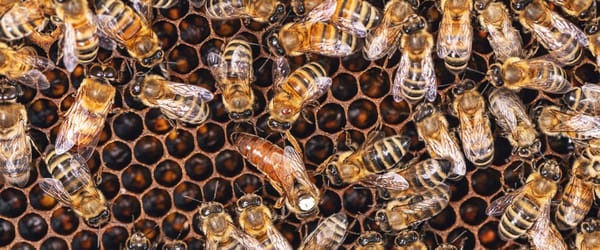
The result is an age structure within the cluster. Older bees (those that emerged in late summer) tend to occupy the outer mantle of the cluster. Younger bees cluster in the core. This isn't arbitrary. The colony must maintain sufficient generational overlap to ensure that when the oldest bees begin to die in late winter, there are still enough younger bees to maintain the cluster and, crucially, to rear the first generation of spring bees.
Think of it as a relay race that spans months. The first generation of winter bees must survive long enough to pass the baton to later generations, who will then rear the spring bees that finally break the colony free from its winter constraints.
This is where modern challenges intrude on ancient adaptations. Warmer autumns driven by climate change can disrupt this delicate timing. Extended warm periods in October and November trigger foraging flights. Foraging burns through vitellogenin reserves and elevates juvenile hormone. Winter bees forced to forage age prematurely. The generational overlap shortens. The relay race ends before spring.
Similarly, research has shown that summer weather conditions affect winter survival in complex ways. Extreme summer stress can compromise the production of high-quality winter bees months before winter arrives.
How the Winter Cluster Generates and Retains Heat
Once temperatures drop to around 57°F/14°C, the cluster forms. This is where those carefully prepared winter bees earn their keep.
The cluster operates on two principles: (1) passive insulation and (2) active heat production. The outer mantle functions as a living blanket, multiple bees deep, creating an insulating shell that dramatically slows heat loss. Bees in the mantle pack tightly together, leaving minimal air gaps.
Inside the core, something remarkable happens. Specialized "heater bees" generate heat through muscle thermogenesis. Essentially, they flex their flight muscles without moving their wings, converting chemical energy directly into heat. This isn't mindless shivering. Heater bees position themselves throughout the core and can maintain precise temperature control.
A healthy cluster can maintain a core temperature of 88°F/31°C even when outside temperatures plunge to -18°F/-28°C. That's a temperature differential of over 100 degrees Fahrenheit/nearly 60 degrees Celsius, maintained by a few thousand insects using only stored honey as fuel.
The exact temperature they maintain depends on what's happening inside the cluster. Without brood, they can relax to around 64°F/18°C, conserving honey stores. But when the queen begins laying again in late winter, the cluster must ramp up to 95°F/35°C in the brood areas, the optimal temperature for developing larvae.
This increase in temperature demand is why late winter is what David Evans calls "the danger zone". The colony has already depleted much of its population through the long winter months. Honey stores are running low, and suddenly, the energy demands spike just when the bees are most vulnerable. Many colonies that seemed to be sailing through winter die in February or March, just weeks before abundant spring forage returns.
Critical Factors for Overwintering Bee Survival
Not all colonies enter winter equally prepared. Research has identified some critical thresholds that separate survivors from casualties.
Colony size matters enormously. Optimal winter populations range from 25,000 to 30,000 bees. Below 18,000 bees, survival becomes precarious. Small clusters simply can't generate and retain enough heat while simultaneously maintaining the generational overlap needed to survive until spring. They run out of bees before they run out of time.
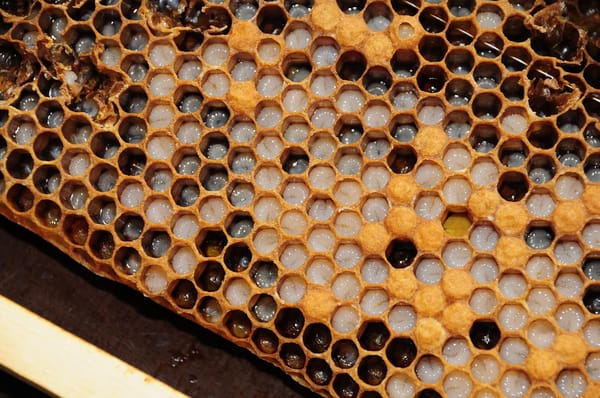
Varroa also plays a role in surviving winter. Varroa destructor mites specifically target and compromise winter bee production. Mites reproduce in brood cells, and their offspring feed on developing pupae. Bees that emerge from mite-infested cells have depleted vitellogenin, damaged fat bodies, and shortened lifespans. They're winter bees in name only. They can't fulfill their biological role to survive months of cold.
A colony that appears strong in September but was heavily mite-infested during August has already lost the winter survival game.
That is why treatment timing is absolutely critical. You must treat for Varroa before winter bees are being produced, or your treatment will be too late. A colony that appears strong in September but was heavily mite-infested during August has already lost the winter survival game. Those bees emerging in late summer look like winter bees, but they lack the physiological tools to actually survive winter.
The colony will form a cluster. It may maintain good cluster behavior into December or even January. But gradually, the population will dwindle faster than it should. The generational overlap will fail. By February, when the queen tries to ramp up brood production, there aren't enough nurse bees left. The colony dwindles and dies, often with abundant honey still in the hive. They didn't starve. They simply ran out of bees.
They didn't starve. They simply ran out of bees.
Practical Autumn Management for Winter Bee Success
Understanding the biology of winter bee longevity and generational overlap reframes autumn management. You're not just feeding colonies and treating for mites. You're managing the production of a specialized caste of long-lived individuals who must maintain a precise age structure over months of confinement.
Late summer Varroa treatment isn't optional. It's foundational.
This means August and September are arguably the most critical months in the beekeeping calendar. What happens then determines what happens in February. Late summer Varroa treatment isn't optional. It's foundational. You're protecting the vitellogenin reserves and fat body development of bees that haven't even emerged yet.
It means understanding that winter losses aren't always about starvation or cold. They're often about population structure. A colony that enters winter with 15,000 bees and excellent stores might still fail because it simply doesn't have the generational depth to survive until spring brood production can rebuild the population.
It means paying attention to autumn weather. If October is unusually warm and your bees are flying heavily, those aren't just lovely foraging days. Each flight is burning vitellogenin reserves that should be carried into winter. You can't control the weather, but you can recognize this as a risk factor.
Late winter, when brood rearing resumes and colony temperatures must be elevated, is when many colonies fail. If you're going to check on winter clusters or provide emergency feeding, late February and March may be more critical than December.
The Elegance of Evolved Solutions
There's something deeply satisfying about understanding how honey bee colonies solve the problem of winter survival. They don't do it through individual resilience. No single bee could survive months of freezing temperatures. They do it through collective action enabled by a remarkable biological transformation that turns short-lived summer workers into long-lived winter survivors.
The vitellogenin system, fat body development, suppression of juvenile hormone, precise age structure within the cluster, and the thermogenic capabilities of heater bees: these are all parts of an integrated solution that evolved over millions of years. How amazing is that?
As beekeepers, we can't improve on this system. We can support it, though. We can time our Varroa treatments to protect winter bee development. We can ensure colonies are populous enough to maintain the necessary generational overlap. We can provide adequate nutrition in late summer when fat bodies are being provisioned.
Winter cluster survival isn't just about honey stores and a tight entrance. It's about longevity, generational overlap, and the biological machinery that enables both. When you understand that, you become a better partner to your bees in their annual race against time and cold.